
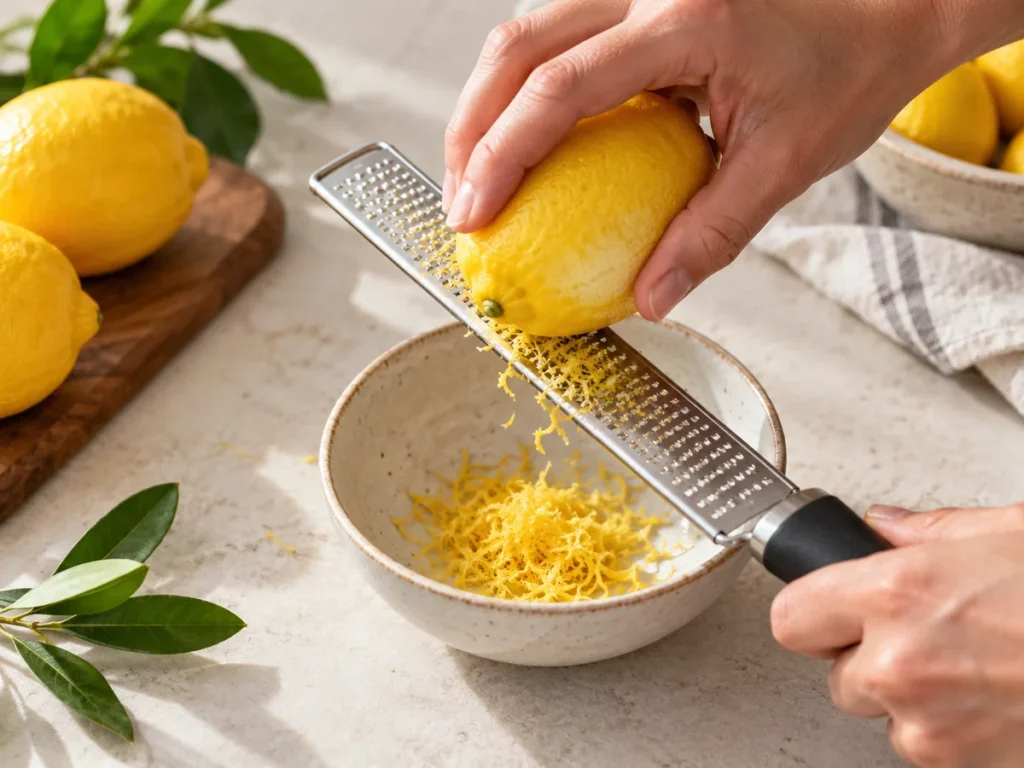
A Microplane-style fine zester and a box grater both reduce food to small pieces, but they solve different prep problems. The right choice depends on the texture you want, how much you are grating, and how much cleanup you can tolerate.
Quick answer
Use a fine zester for citrus zest, hard cheese dust, and small amounts of aromatic ingredients. Use a box grater when you need several textures or a larger pile of shredded cheese or vegetables. A zester is compact and precise; a box grater is more versatile for batch prep.
What each tool does best
Fine zester
A long, narrow fine grater removes a thin layer from citrus peel and creates delicate shreds. Work over a plate or bowl and rotate the fruit as you go. Stop when the bright outer peel is removed; the white pith underneath tastes bitter. It also works for small amounts of hard cheese, nutmeg, ginger, or chocolate, depending on the surface and the recipe.
Box grater
A box grater gives you several hole sizes on one stable tool. The coarse side is useful for cheese, carrots, and zucchini; finer sides suit smaller shreds. It takes up more drawer space and can be awkward to clean around its corners, but it is the better single tool when you regularly prep larger quantities.
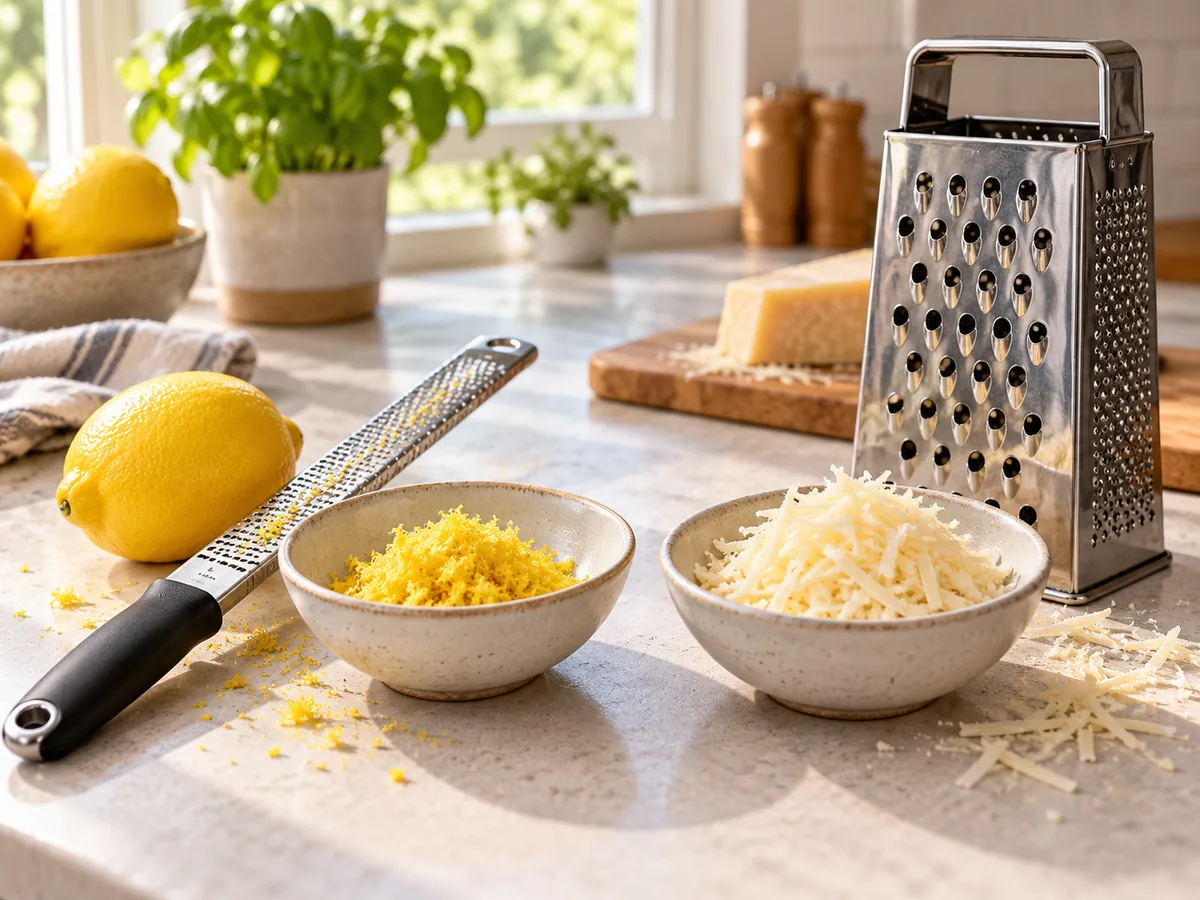
Choose by task
- Lemon or lime zest: fine zester for a light, even layer.
- A block of cheese for a casserole: box grater for speed and volume.
- A little Parmesan over pasta: either can work; choose the texture you prefer.
- Several prep jobs with one tool: box grater if you need multiple shred sizes.
- Small kitchen or frequent citrus use: zester is easier to store and quick to reach.
Use and cleanup tips
Keep the tool steady over a board or bowl, move food away from your fingers, and avoid pressing hard. A light pass gives more control and helps prevent scraping the bitter pith. Rinse the grating surface soon after use, brushing from the back of the teeth toward the front where safe. Use a soft brush rather than rubbing fingers across sharp edges. Let the tool dry fully before putting it away.

What to check before buying
For a fine zester, check handle comfort, grating surface length, whether a protective cover is included, and whether it can be stored safely. The featured Microplane Premium Classic Zester Grater is one option for fine grating; confirm the current color and listing details before ordering. A box grater may be the more useful purchase if you need coarse and fine shreds in larger amounts.
Featured tool: Microplane Premium Classic Zester Grater
Consider it for fine citrus zest and small amounts of finely grated ingredients. It is a narrow specialty tool, so it does not replace a multi-sided box grater for every prep task.
Check the Amazon listing for the exact item, current options, and availability.Common questions
Can I use a zester instead of a box grater?
For small amounts and fine texture, yes. For coarse shreds or a large batch, a box grater is more efficient.
How do I keep zest from tasting bitter?
Remove only the colored outer peel and stop before the white pith shows through.
Disclosure: Zoventaq may earn a commission from qualifying purchases made through affiliate links, at no extra cost to you.
Side-by-side comparison
| Job | Fine zester | Box grater |
|---|---|---|
| Citrus zest | Best: thin, fluffy shreds | Works, but shreds are coarser and more pith comes along |
| Hard cheese, like parmesan | Fine, airy dust for topping | Better for larger amounts |
| Cheddar or mozzarella for a casserole | Slow and awkward | Best: fast, even shreds |
| Vegetables, like carrot or zucchini | Not suited | Best: several hole sizes |
| Garlic, ginger, nutmeg | Best: fine paste or powder | Too coarse |
| Storage | Slim, fits in a drawer | Bulky, needs cabinet space |
Safety and cleanup tips
- Protect your knuckles. Both tools are very sharp. Stop when you reach the last small piece, instead of grating it down.
- Clean right away. Dried cheese and zest stick to the holes. Rinse under water and brush in the direction of the holes, not across them.
- Use a stable surface. Place a box grater on a damp towel or board so it does not slide.
- Dry it fully before storing to prevent rust on metal blades.
Which one should a small kitchen own?
If you cook often and have to choose just one, a box grater covers more jobs. If you bake, make sauces or season dishes with citrus and hard cheese, a zester is worth the small drawer space. Many home cooks end up with both because they do different things well. Check blade quality and handle comfort in the current listing, and read what buyers say about durability before you decide.
Getting the best results from a zester
When zesting citrus, take only the colored outer layer. The white pith underneath tastes bitter. Wash and dry the fruit first, especially if the peel will be eaten, and zest over a plate or parchment so you capture the oils. A zester also works on hard cheese, whole spices such as nutmeg and fresh ginger.
Getting the best results from a box grater
Use the large holes for cheese, carrots and potatoes, and the fine side for small amounts of hard cheese or garlic. Chilling soft cheese for a short time makes it easier to grate cleanly. Place the grater on a damp towel or board so it does not slide.
Safety and cleanup tips
- Use the finger guard or a cut-resistant glove, and stop grating when the piece gets small.
- Rinse right away; dried cheese and zest are hard to remove.
- Brush debris out from the back of the grater with a small brush rather than your fingers.
- Store graters with the blade side protected.
Updated October 30, 2026. Zoventaq’s guides are desk research and are not based on hands-on testing.
Frequently asked questions
Can a box grater zest a lemon? It can, using the smallest holes, but the zest is coarser and you are more likely to grate bitter pith.
Can I grate soft cheese on a zester? Soft cheese clogs a fine zester. Chill it first, or use the large holes of a box grater.