Selection criteria

What to compare before you buy

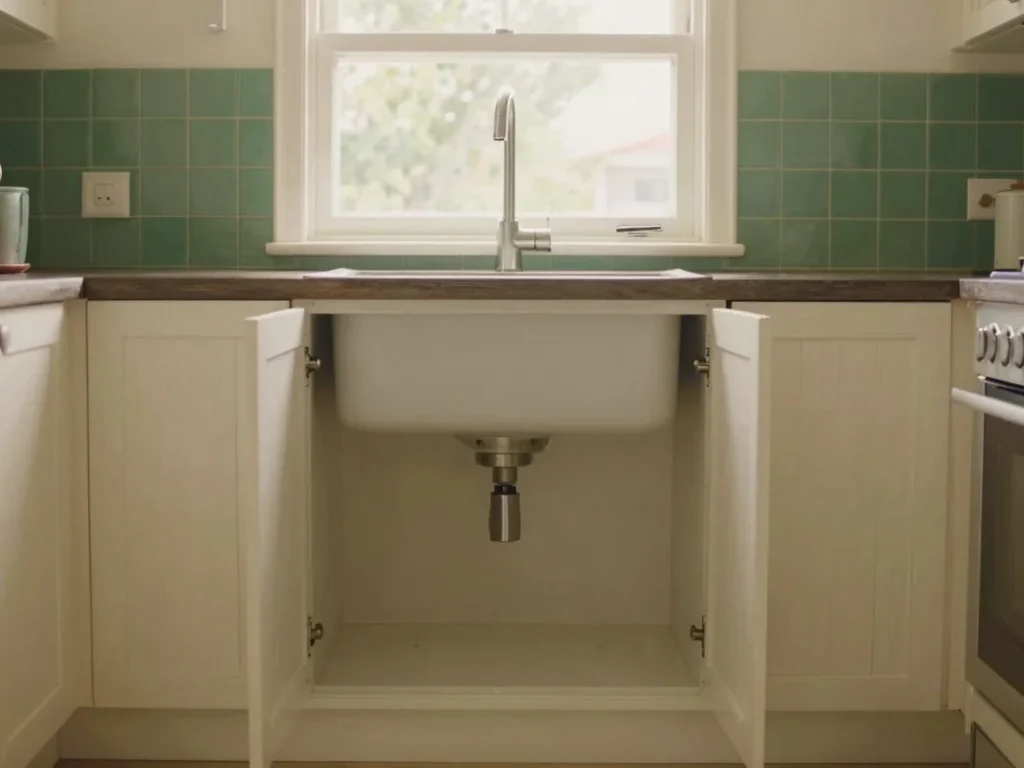
Under-sink

Sliding under-sink units

Check vertical clearance, the pipe layout, and how far the drawer must slide past plumbing. Measure width at the front and back, since cabinet walls are often not parallel. Note any tilt or shelf height changes that affect use.

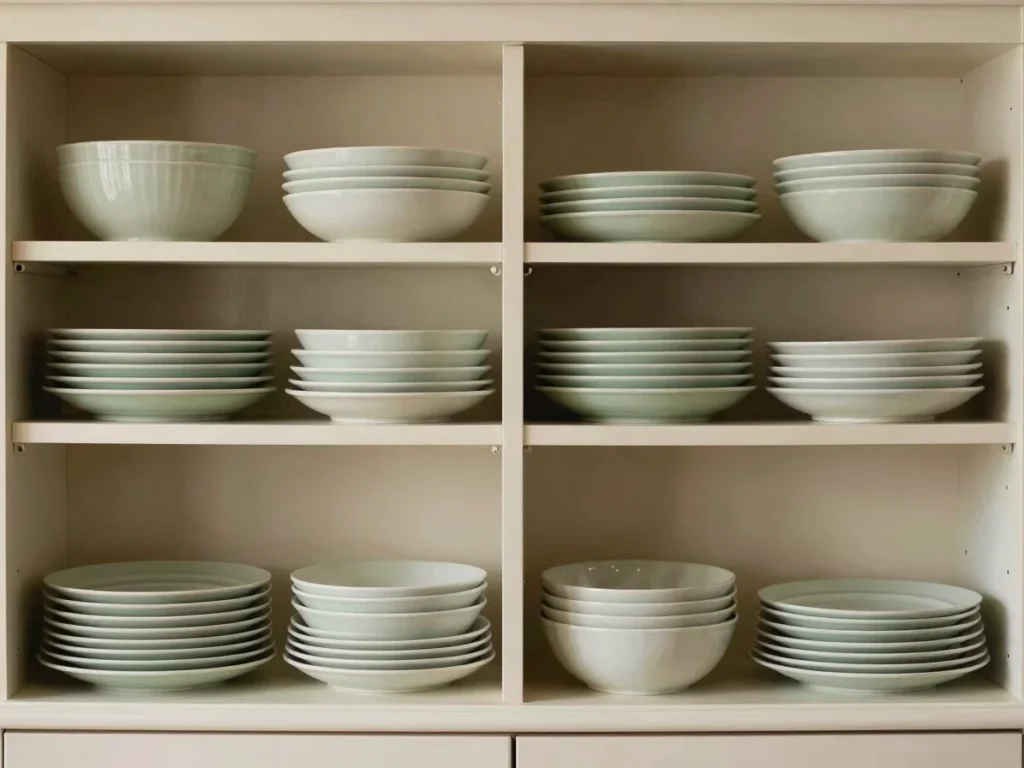
Shelves

Expandable shelf risers

Look at internal depth and the load each tier is meant to carry. Confirm that the riser clears the tallest items you store and that the feet grip a flat surface rather than sliding. Adjustable height is useful only if you will actually reconfigure it.

Drawers

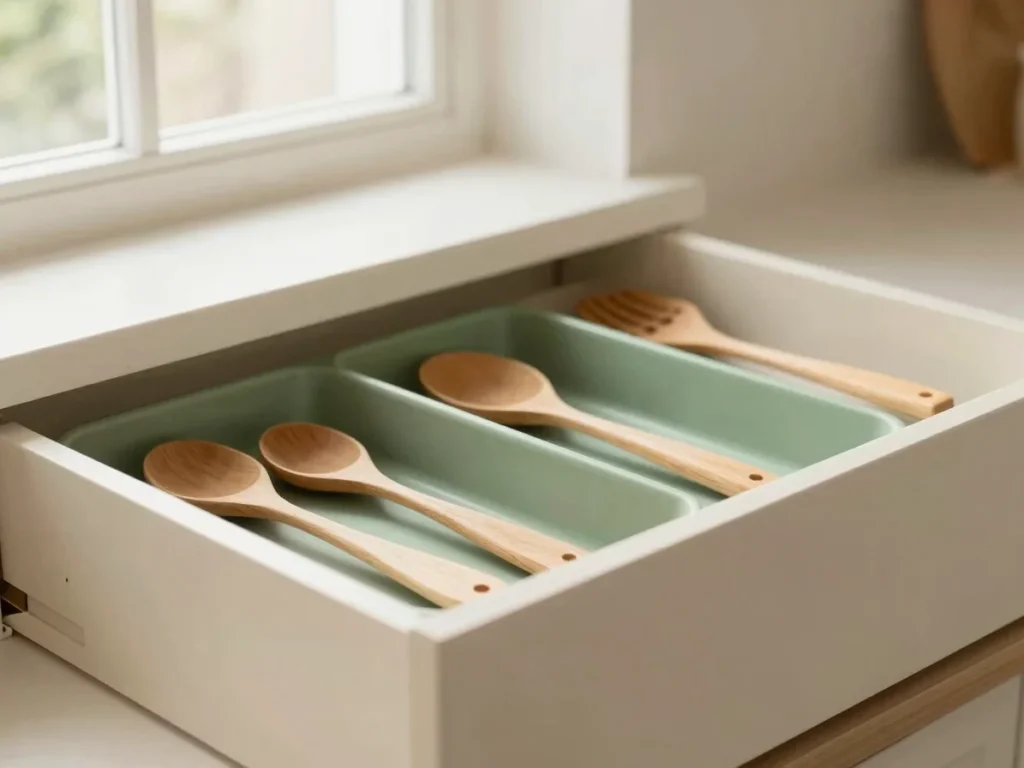
Drawer dividers and organizers

Evaluate internal depth, whether the base stays put on a smooth liner, and whether the dividers can be rearranged. Check the drawer width at the narrowest point, including handles and runners, before measuring for a fit.

Before you order

A four-step storage checklist

01

Measure cabinet obstacles

Record height, width, and depth at several points, and mark pipes, hinges, and any electrical runs that would block a unit or riser.

02

Account for door clearance

Confirm that doors and drawer fronts can open fully once the organizer is installed, including any handles or hinge arms that project inward.

03

Verify load capacity

Compare the heaviest items you plan to store with the stated limits, and allow a margin, since product limits describe ideal conditions.

04

Check material washability

Choose surfaces you can wipe or rinse easily, and confirm that the finish tolerates moisture from under the sink or a dishwasher nearby.

Zoventaq selection guide

Five storage options for five different problems

Start by removing unused items, then measure the space that remains. Use the notes below to match an organizer to the job; you may only need one of these options.

As an Amazon Associate I earn from qualifying purchases. These are research-based suggestions, not hands-on reviews. Check the exact variant, dimensions, seller, current price and delivery to your US address on Amazon before ordering.
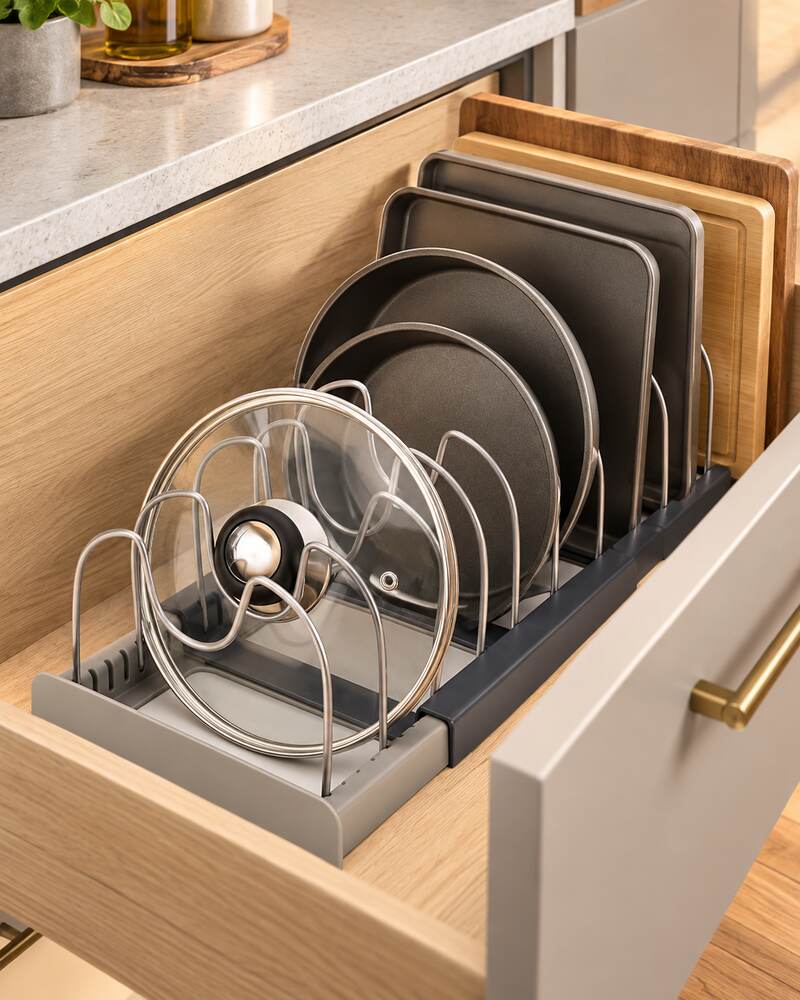
AI-generated lifestyle illustration for Joseph Joseph DrawerStore Expanding Cookware Organizer
AI-generated illustration; see Amazon for exact product appearance and included pieces.

For lids and baking trays

Joseph Joseph DrawerStore Expanding Cookware Organizer

An upright divider layout is worth considering when stacked lids and trays make the back of a cabinet hard to reach.

Before buying: Measure the fully usable cabinet space and the tallest lid. Upright storage needs enough height as well as width.

Product details source

View on Amazon ↗
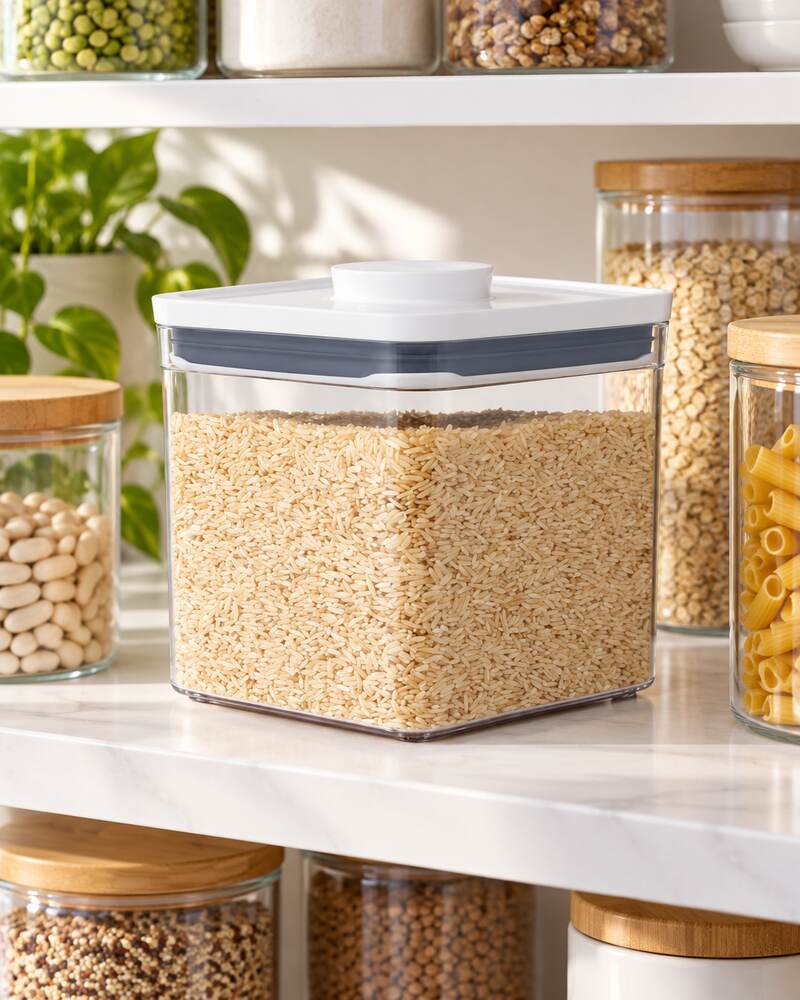
AI-generated lifestyle illustration for OXO Good Grips POP Container, 2.8 Qt
AI-generated illustration; see Amazon for exact product appearance and included pieces.

For dry pantry ingredients

OXO Good Grips POP Container, 2.8 Qt

A clear container makes its contents easier to identify. Choose a capacity around what you actually buy rather than decanting every ingredient into the same size.

Before buying: This is one 2.8-quart container, not a multi-container set. Check your shelf height, footprint and the care directions.

See listing details using the Amazon button below.

View on Amazon ↗
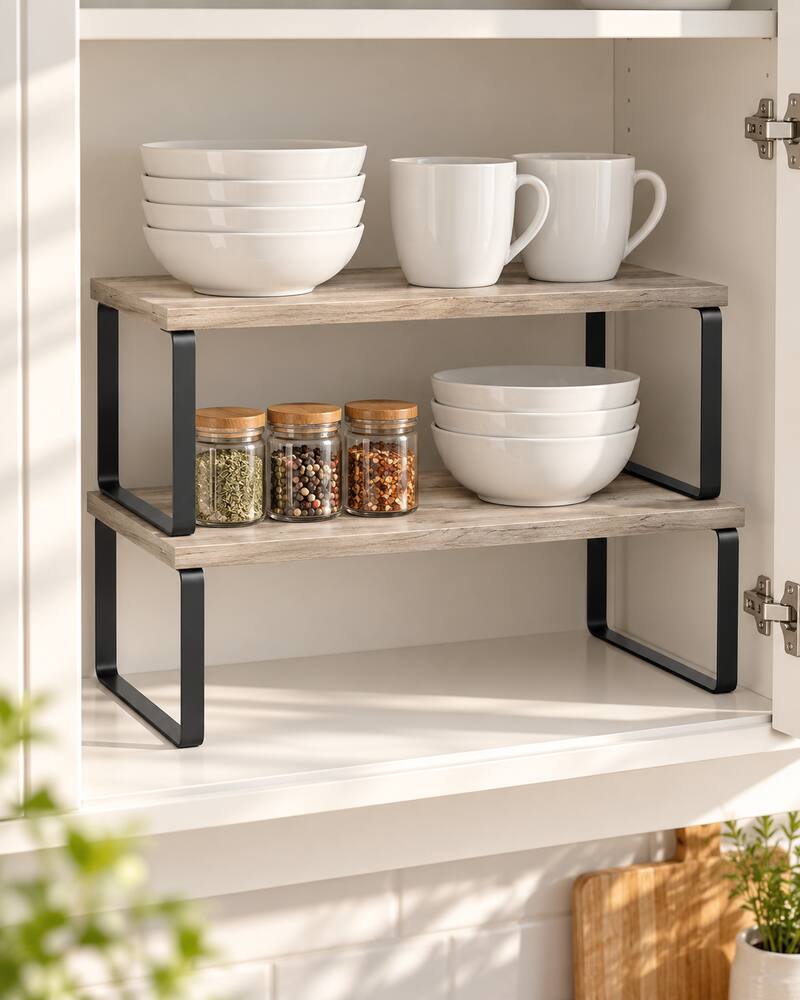
AI-generated lifestyle illustration for SONGMICS Cabinet Organizer Shelves, Set of 2
AI-generated illustration; see Amazon for exact product appearance and included pieces.

For unused vertical shelf space

SONGMICS Cabinet Organizer Shelves, Set of 2

Shelf risers can create a second level for small cups, bowls or jars without changing the cabinet itself.

Before buying: The linked listing is the light-ivory set. Confirm dimensions, safe load and headroom; the illustration may show a different finish.

See listing details using the Amazon button below.

View on Amazon ↗
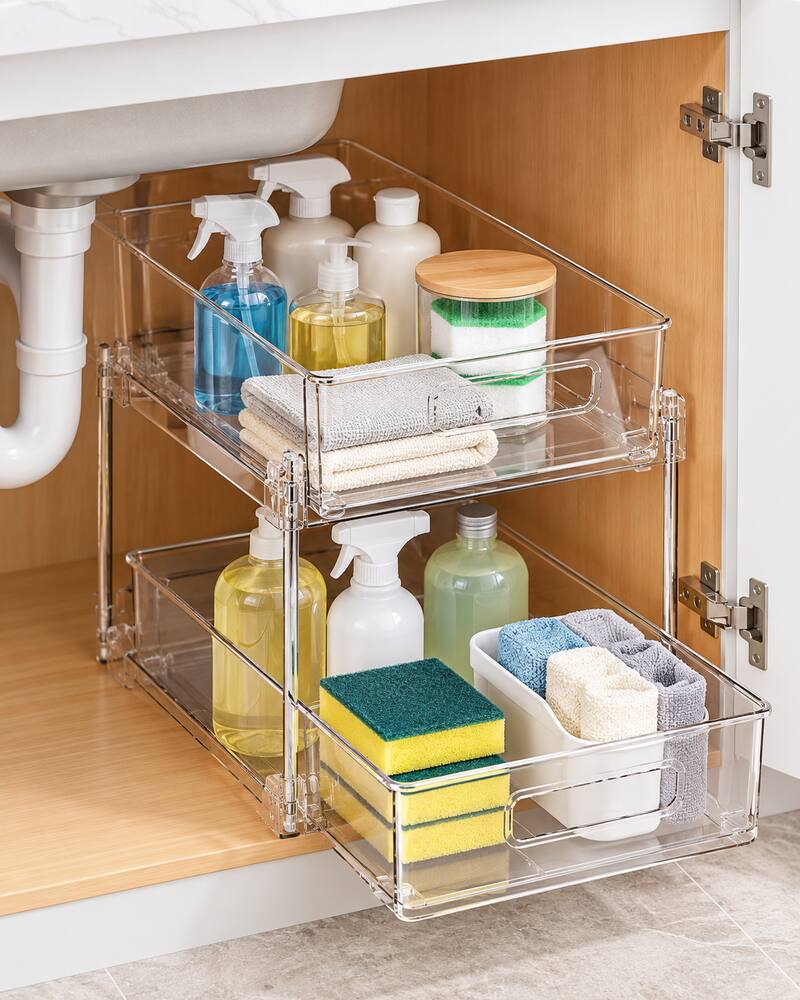
AI-generated lifestyle illustration for Vtopmart 4-Pack Pull-Out Under-Sink Organizer, S-Standard
AI-generated illustration; see Amazon for exact product appearance and included pieces.

For accessible small-item storage

Vtopmart 4-Pack Pull-Out Under-Sink Organizer, S-Standard

Clear slide-out drawers can help separate small supplies so that reaching an item does not mean moving everything in front of it.

Before buying: Marketed as a bathroom organizer; confirm suitability for your kitchen cabinet. Pipes, hinges and the drawer pull-out path can prevent a fit.

See listing details using the Amazon button below.

View on Amazon ↗
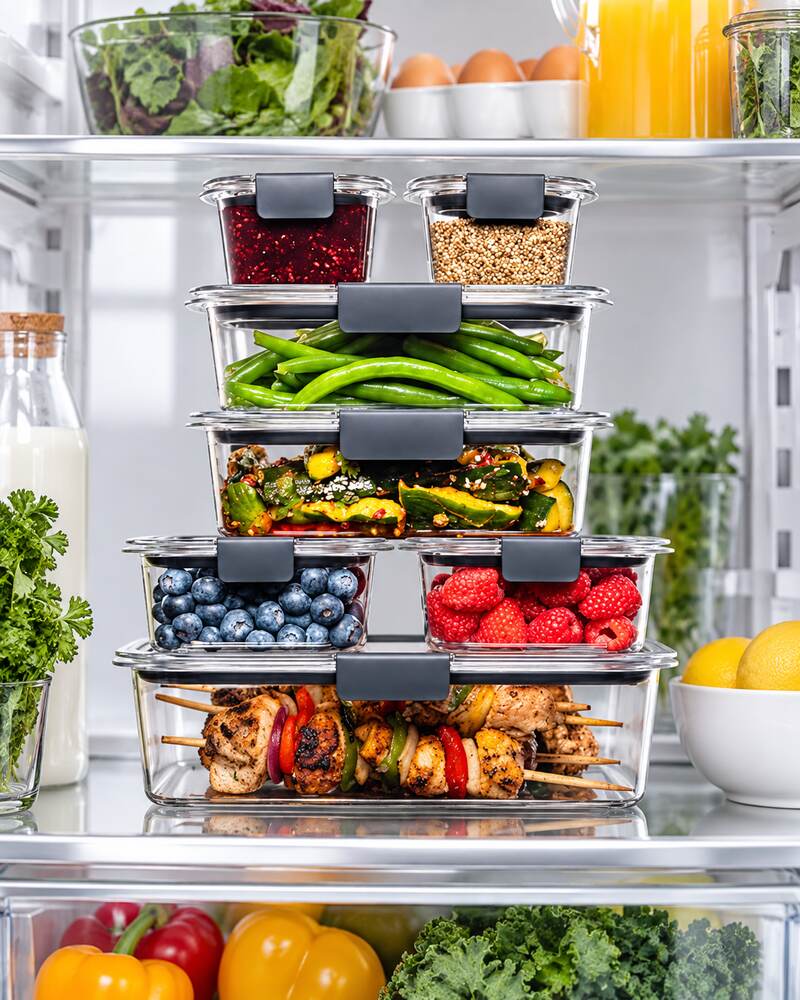
AI-generated lifestyle illustration for Rubbermaid Brilliance Food Storage Containers, 14-Piece Set
AI-generated illustration; see Amazon for exact product appearance and included pieces.

For organizing leftovers and portions

Rubbermaid Brilliance Food Storage Containers, 14-Piece Set

Clear food containers are a practical option when identifying leftovers quickly matters more than displaying pantry ingredients.

Before buying: This linked set is plastic, not glass. Piece counts include lids. Compare the included sizes with your portions and follow the product care instructions.

See listing details using the Amazon button below.

View on Amazon ↗

Put it to work

  1. Empty one shelf or drawer and keep only what belongs there.
  2. Measure usable width, depth and height; photograph hinges and plumbing.
  3. Choose one organizer for the main problem, leaving room to lift or pull items out.
  4. For under-sink storage, keep food separate from cleaning chemicals and keep leak-prone plumbing accessible.
  5. For drawers, group everyday cutlery near the front; measure taller utensils before choosing compartments.

How to plan kitchen storage before you buy

Most storage problems are not caused by too little storage. They come from items that live far from where they are used, or from shelves that are full of things you rarely touch. Before you buy anything, empty one cabinet or drawer, keep only what you actually use, and notice which items you reach for every day. That small audit often removes half the clutter and tells you what kind of organizer, if any, you really need.

Then measure the usable space, not the outside of the cabinet. Hinges, door frames, pipes and shelf pins all take room. Record width, depth and height at the tightest point, and keep the numbers on your phone when you compare listings. A product that is one inch too deep will not fit, no matter how good the reviews are.

Which storage type suits which problem

  • Hard-to-reach back corners: turntables or pull-out bins, as long as the door swing and pipes allow them.
  • Wasted height: shelf risers or stackable shelves, provided you can still lift items out without tipping them.
  • Messy drawers: dividers or expandable trays sized to the inside of the drawer.
  • Dry goods and leftovers: clear containers in a few sizes you will actually use.

If a simple rearrangement solves the problem, you do not need to buy anything. Our guides say so when that is the better answer.

Guides to read next