
Zoventaq selection guide
Choose the tool for the cleaning job
Start with the surface and the size of the task. A floor mop, detail brush and sink organizer solve different problems; buying all three is not automatically better.
As an Amazon Associate I earn from qualifying purchases. These are research-based suggestions, not hands-on reviews. Check the exact variant, dimensions, seller, current price and delivery to your US address on Amazon before ordering.
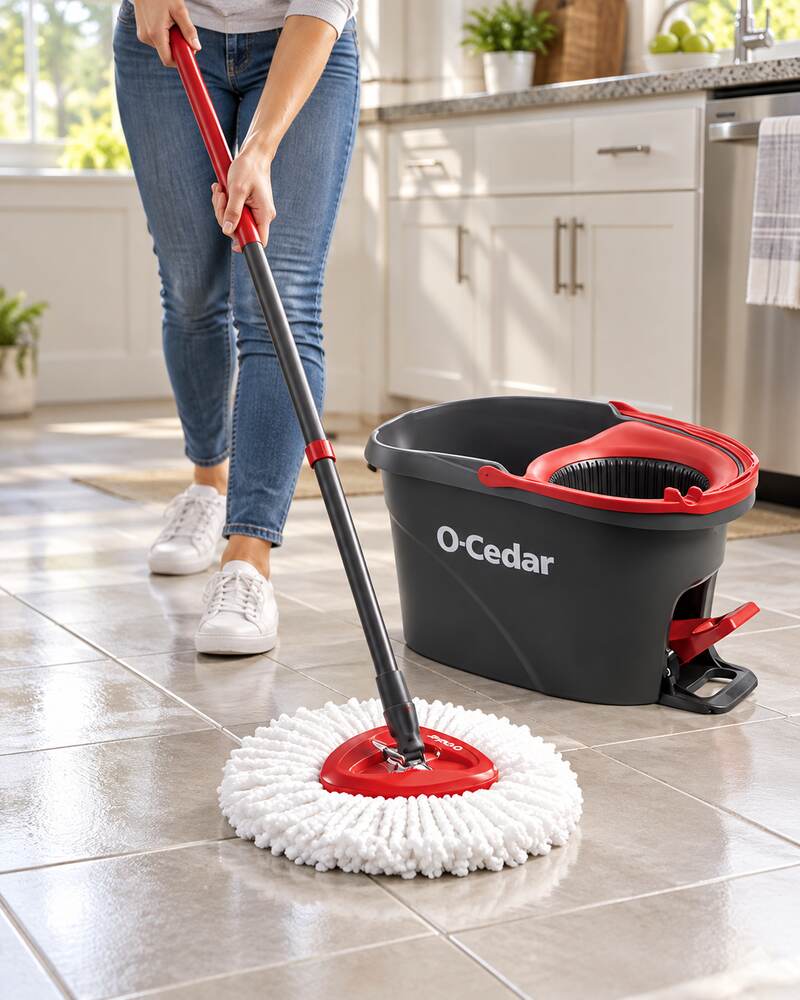
For routine hard-floor mopping
O-Cedar EasyWring Microfiber Spin Mop & Bucket
A mop-and-bucket system suits larger floor areas where a small hand brush would be impractical. Keep floor cleaning separate from sink and food-preparation tools.
Before buying: Confirm your flooring permits damp mopping. Follow the flooring maker’s moisture guidance and check the linked package contents.
See listing details using the Amazon button below.
View on Amazon ↗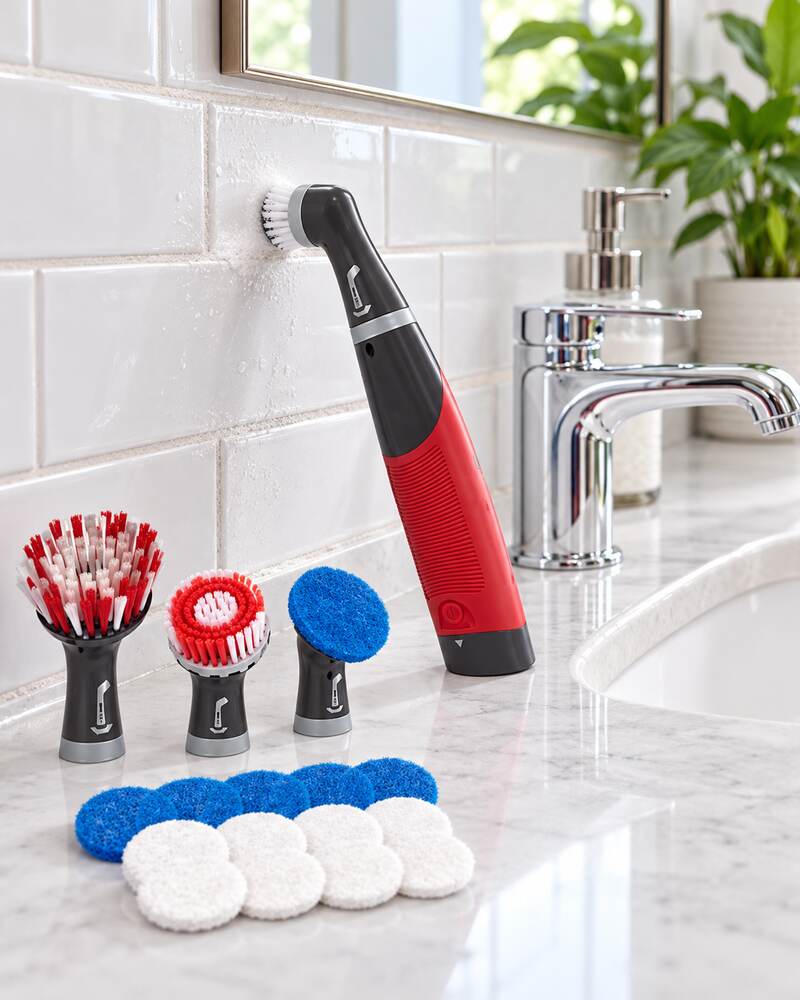
For targeted detail cleaning
Rubbermaid Reveal Power Scrubber, 18-Piece Kit
A powered handheld brush is an option for detailed work around fixtures and tile edges, rather than cleaning an entire floor.
Before buying: Check current seller availability and included attachments. Match the brush to the finish; test an inconspicuous spot and follow the water-exposure instructions.
View on Amazon ↗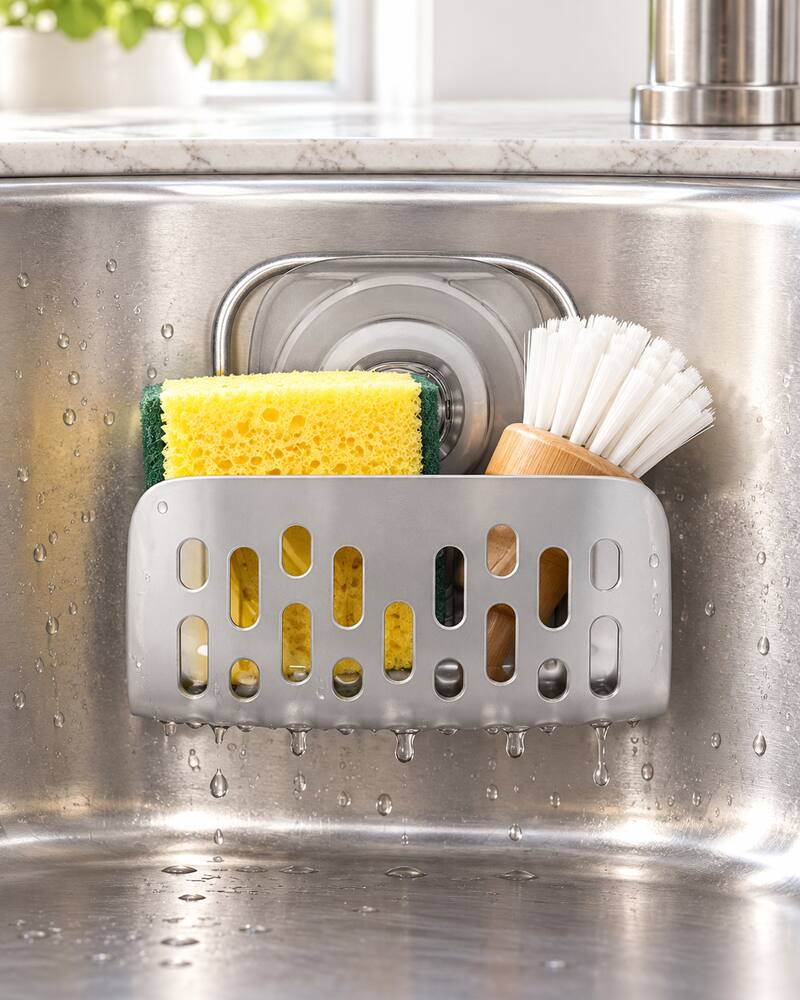
For keeping a sponge off the counter
OXO Good Grips Stronghold Suction Sponge Holder
A suction-mounted holder may suit a small sink area where countertop space is limited. Let the sponge dry between uses.
Before buying: Check the manufacturer’s compatible surfaces before buying. Suction mounting may not work well on textured or uneven surfaces.
See listing details using the Amazon button below.
View on Amazon ↗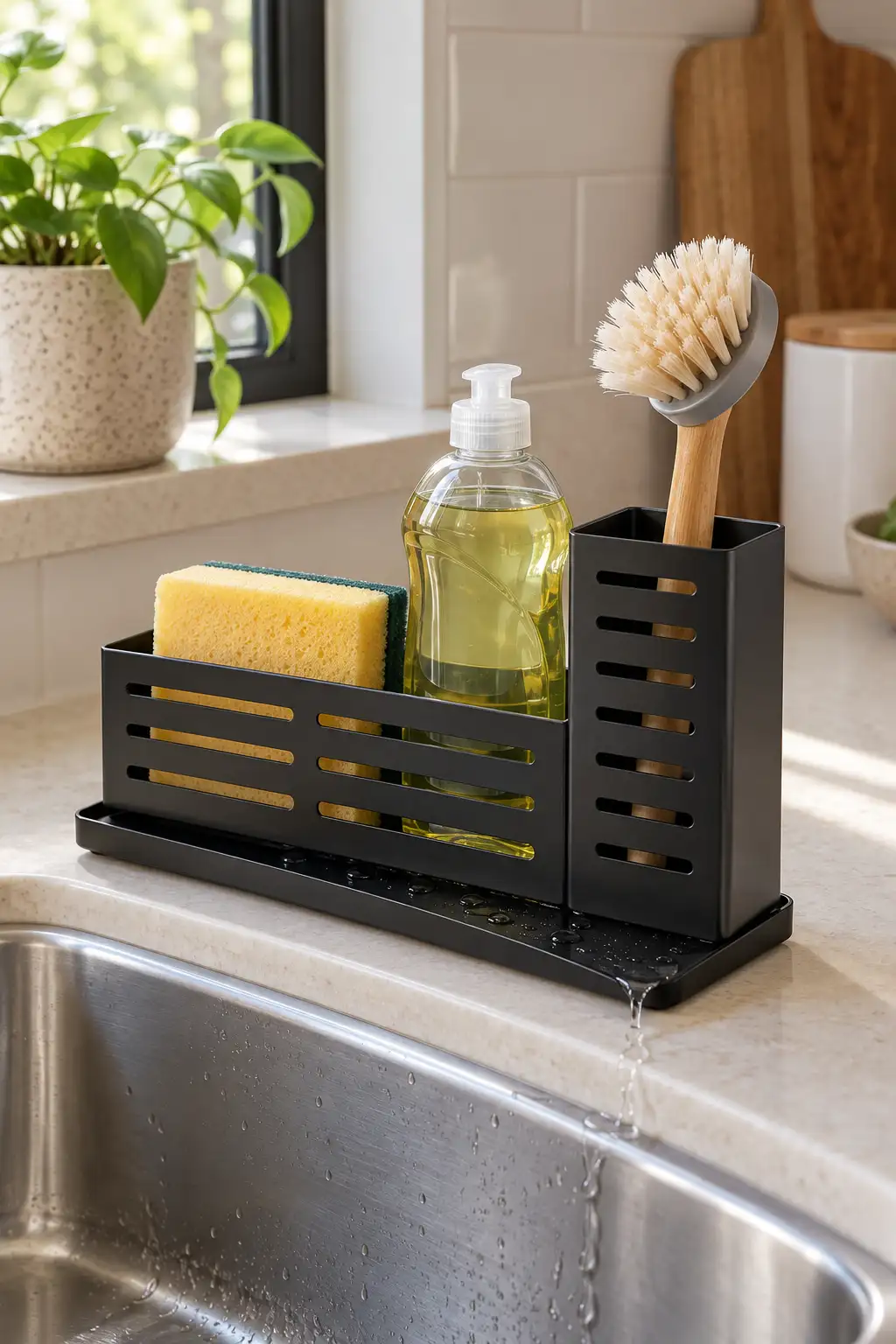
For grouping sink-side supplies
Cisily Sink Caddy with Brush Holder
A sink caddy gives brushes and sponges a dedicated place. Choose it when scattered supplies, rather than scrubbing effort, are the main problem.
Before buying: Measure the available space around the faucet. Check drainage, the exact color and whether your tallest brush fits.
See listing details using the Amazon button below.
View on Amazon ↗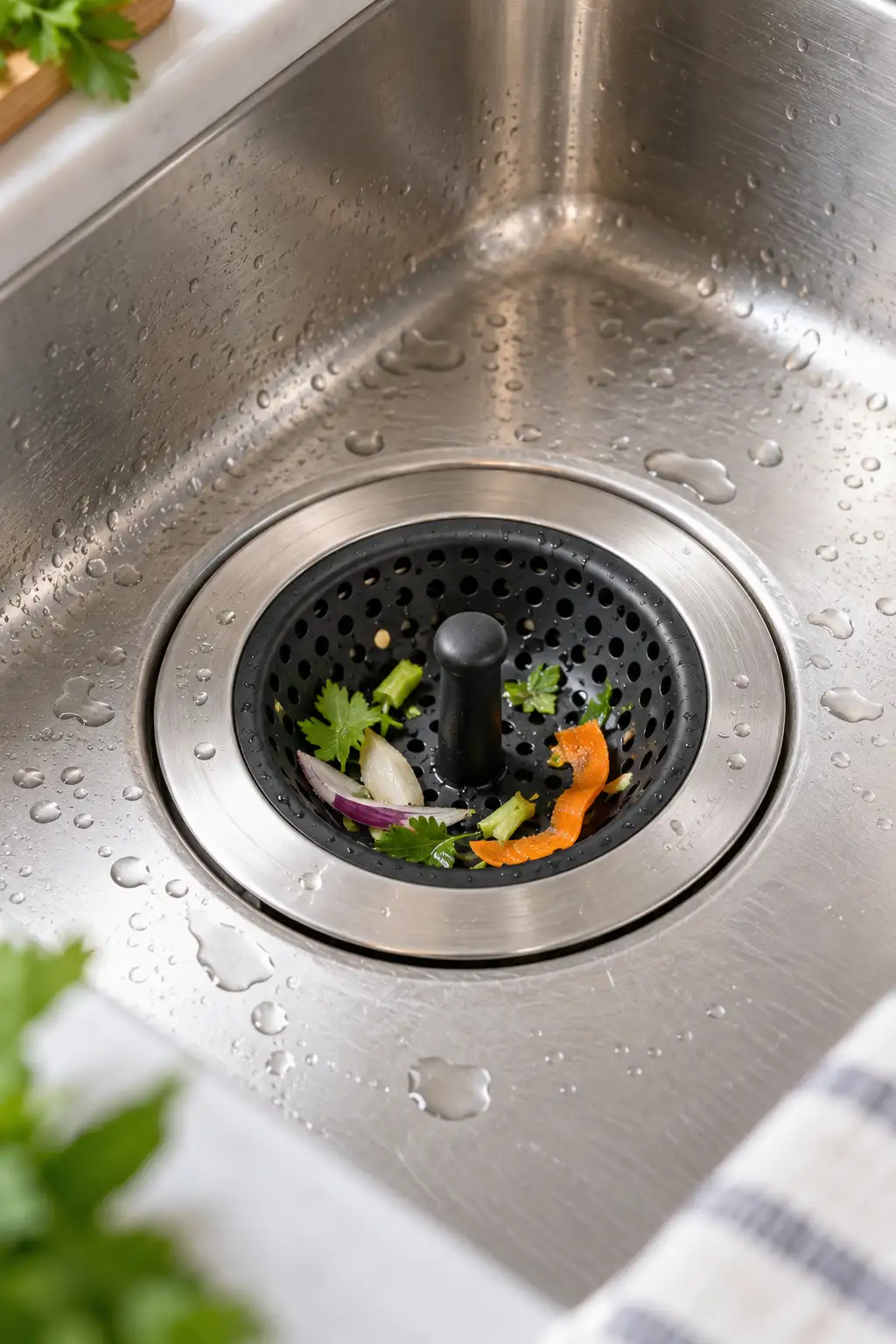
For catching food scraps
OXO Good Grips Silicone Sink Drain Strainer
A removable strainer is worth considering if food scraps are regularly reaching the sink drain. Empty trapped scraps promptly.
Before buying: Measure your drain opening and compare the fit. A strainer does not clear a blocked drain or replace proper disposal practices.
See listing details using the Amazon button below.
View on Amazon ↗Put it to work
- For tight corners, measure the gap before comparing brush heads. A larger head cannot clean a narrower opening.
- Check the surface-care instructions and test tools on a hidden area first.
- Use separate tools for floors, bathrooms and food-contact areas.
- Remove visible dirt, then follow the label if a separate disinfectant is needed. A cleaning tool alone does not establish disinfection.
- Rinse, dry and store the tool as directed; replace worn heads instead of pressing harder.