
An under-sink cabinet needs a surface that fits its plumbing, doors, and stored supplies. A protective mat and a shelf liner can both help, but they are not interchangeable: one may be designed to absorb small drips, while another mainly covers and cushions the cabinet floor.

Start with the problem you are solving
If your goal is to protect a finished cabinet floor from scuffs, dust, or minor spills, a wipeable shelf liner may be enough. If you want a removable layer that can catch or absorb occasional drips, choose a mat whose material and backing are clearly described for that use. Neither option repairs a plumbing leak or replaces a leak sensor.
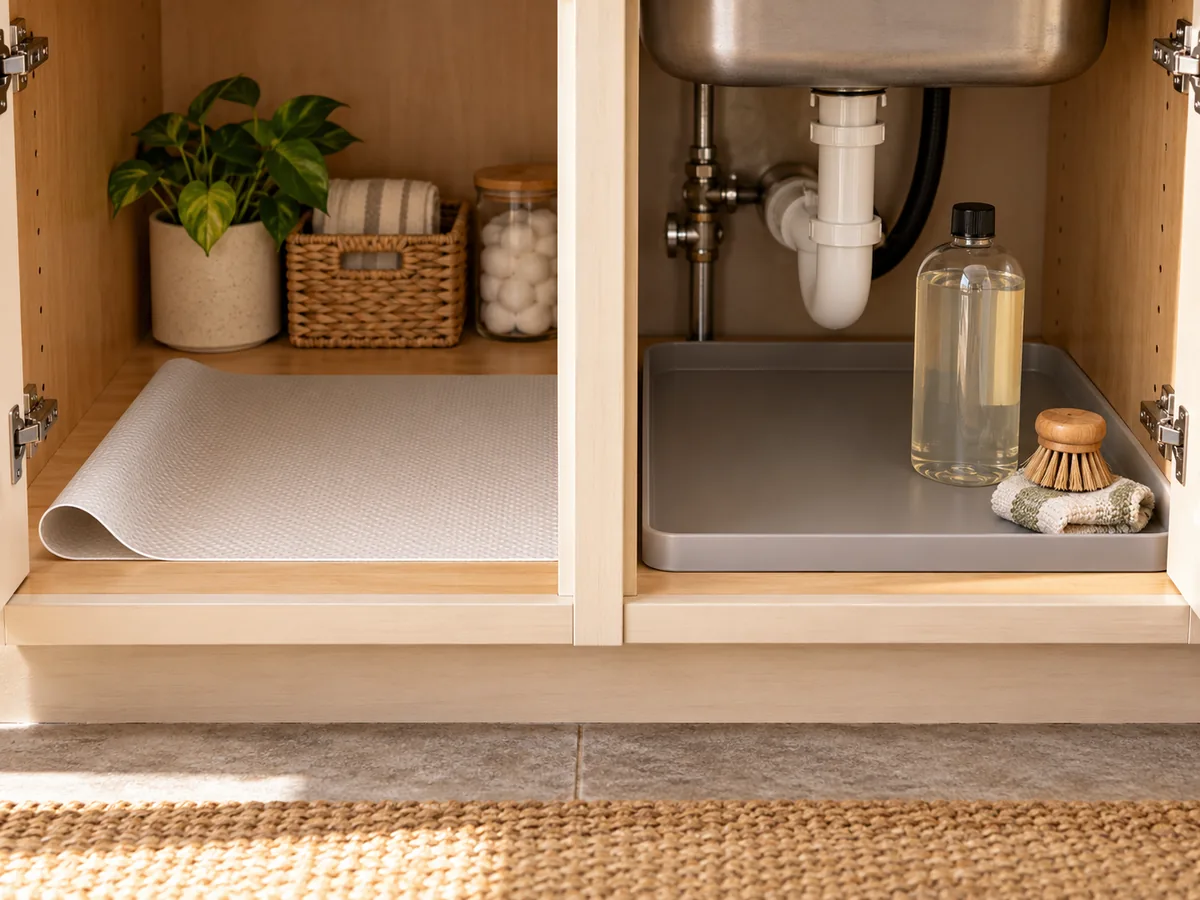
Measure the cabinet before ordering
- Remove cleaning products and measure the usable floor width and depth.
- Measure around the drain, water lines, disposal, and any center support.
- Check the cabinet door swing and leave space for hinges or a pull-out organizer.
- Compare the product’s actual dimensions and trim instructions with your measurements.
- Plan how you will lift the mat out for inspection and cleaning.
Do not assume a mat can be cut: some products have coated edges or layers that may be damaged when trimmed. Confirm the manufacturer’s instructions first.
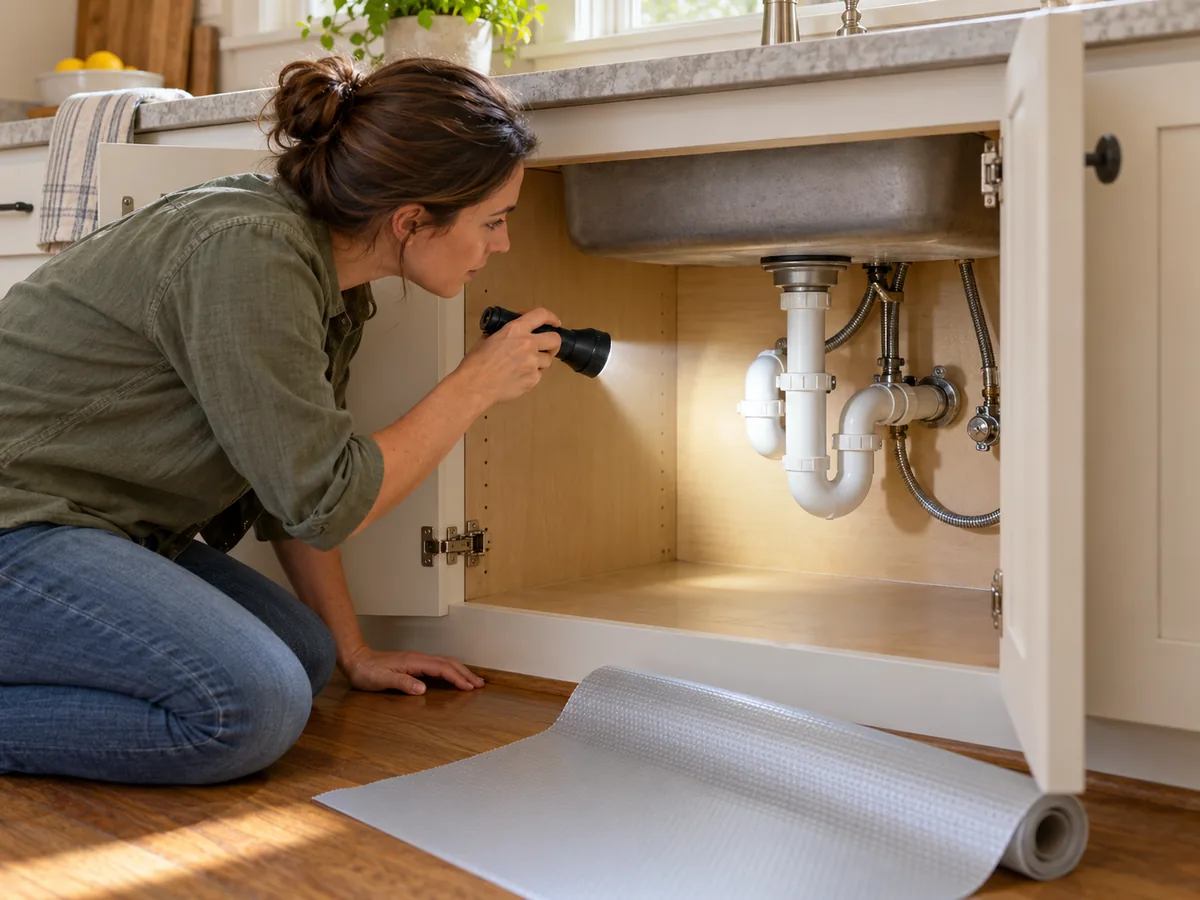
Choose the material for the cabinet
A flexible liner can be easy to cut and wipe, but it may not hold water. An absorbent-top mat with a water-resistant or waterproof backing can help protect the surface from small drips, but it still needs regular inspection. Standing water can travel around edges, and a hidden leak can damage the cabinet even when a liner is present.
Simple upkeep
Check under the sink after installing the mat and periodically afterward. If you find moisture, remove the liner, dry the cabinet, and identify the source before replacing anything. Follow product care directions; avoid trapping dampness against wood or particleboard.
Featured option
The Gorilla Grip LeakGuard liner listed below is described by its maker as an absorbent liner with a waterproof bottom layer. Verify the size and current product details on the listing. Treat it as a protective layer for minor moisture, not as a fix for an active plumbing problem.
Featured product: Gorilla Grip LeakGuard Under-Sink Liner
Consider it when you want a removable absorbent layer under stored cleaning supplies. Check cabinet measurements and inspect the area regularly.
Confirm the exact size and listing details before ordering.Quick checklist
- Measure around plumbing, hinges, and supports.
- Decide whether you need an easy-clean liner or an absorbent mat.
- Check whether trimming is allowed.
- Lift the mat periodically and look for moisture.
Disclosure: Zoventaq may earn a commission from qualifying purchases made through affiliate links, at no extra cost to you.
What each one protects against
An under-sink mat is a waterproof tray or liner with raised edges that catches drips and small leaks. A shelf liner is a thin, flat sheet that grips the surface and protects the cabinet floor from scuffs and light moisture. The mat is built for water, while the liner is built mainly for grip and cleanliness.
Side-by-side comparison
| Feature | Under-sink mat | Shelf liner |
|---|---|---|
| Holds leaked water | Yes, edges contain it | No, water runs off the edge |
| Grip for bottles | Varies by texture | Usually good |
| Cut to fit | Some can be trimmed | Easy to cut |
| Cleaning | Rinse and wipe | Wipe or replace |
| Best for | Sinks with pipes and possible leaks | Dry cabinets and drawers |
How to measure for a mat
- Measure the width and depth of the cabinet floor.
- Note the pipes, the disposal and the drain, because the mat must fit around them.
- Check the front lip of the cabinet so the mat sits flat and the door still closes.
- Pick a size that is slightly smaller than the floor, or one that can be trimmed.
Care and replacement
Check under the sink once a month. Wipe up any water, dry the mat, and look for stains that could point to a slow leak. Wash the mat with mild soap and let it dry before putting items back. Replace a mat or liner if it cracks, curls or stays damp.
Which should you choose?
If your sink has pipes, a dishwasher line or a past leak, a mat gives more protection. If you only need grip and an easy-to-clean surface in a drawer or dry cabinet, a shelf liner is cheaper and simpler. Some people use both: a mat under the sink and a liner in the cabinets beside it.
Where a mat helps and where a liner helps
A raised-edge mat can catch a spill or a slow drip before it reaches the cabinet floor, so it suits cabinets that hold liquids. A flat shelf liner is better for cushioning bottles and stopping them from sliding on shelves, but it is not a leak barrier unless the product says it is waterproof.
Trimming and placing it
- Measure the cabinet floor and subtract a little so the edge can lie flat.
- Cut around pipes and the drain trap rather than forcing the mat over them.
- Do not cover the shut-off valves or make it hard to reach them.
- Lift and wipe both the mat and the floor underneath from time to time.
Signs you should look deeper
If you notice a persistent damp smell, warped cabinet wood or water in the mat, there may be a leak that no mat can fix. Check the supply lines and drain connections, and call a plumber if you are not comfortable repairing them.
Updated October 30, 2026. Zoventaq’s guides are desk research and are not based on hands-on testing.