
A colander and clean towel can wash and dry salad greens with little equipment. A salad spinner adds a basket and a hand-powered spinning step to remove more surface water quickly. If you make salads often, the choice comes down to how much water you need to remove, how many greens you prep, and whether you have room to store a spinner.

Colander and towel: the compact routine
- Rinse greens in a clean colander and shake off excess water.
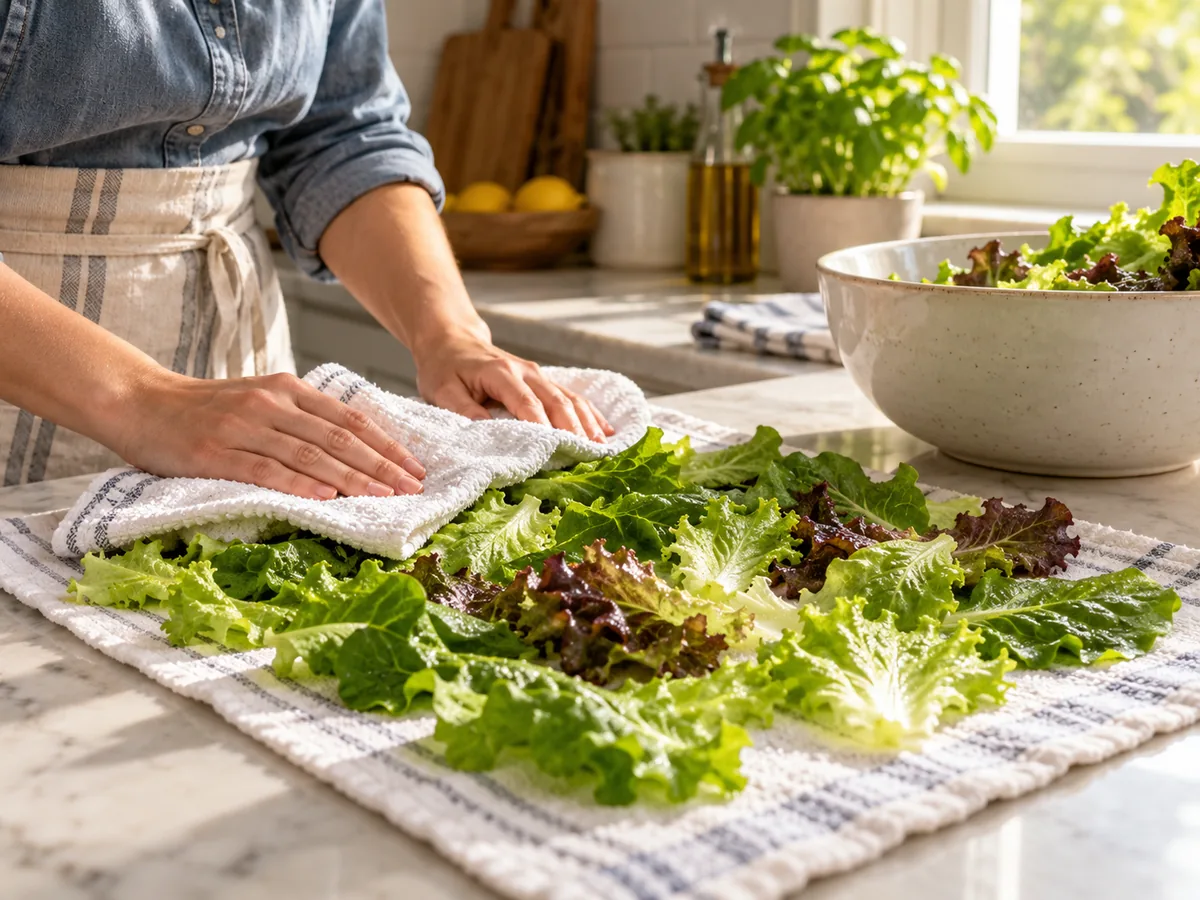
- Spread leaves in a single layer over a clean kitchen towel.
- Pat gently or roll the towel loosely, then check whether the leaves are dry enough for your recipe.
This method costs little if you already own a colander and towel, and each item has other kitchen uses. It takes a little more hands-on time and counter space while the leaves dry. Use a towel reserved for clean food prep, and wash it after use.
When a salad spinner helps
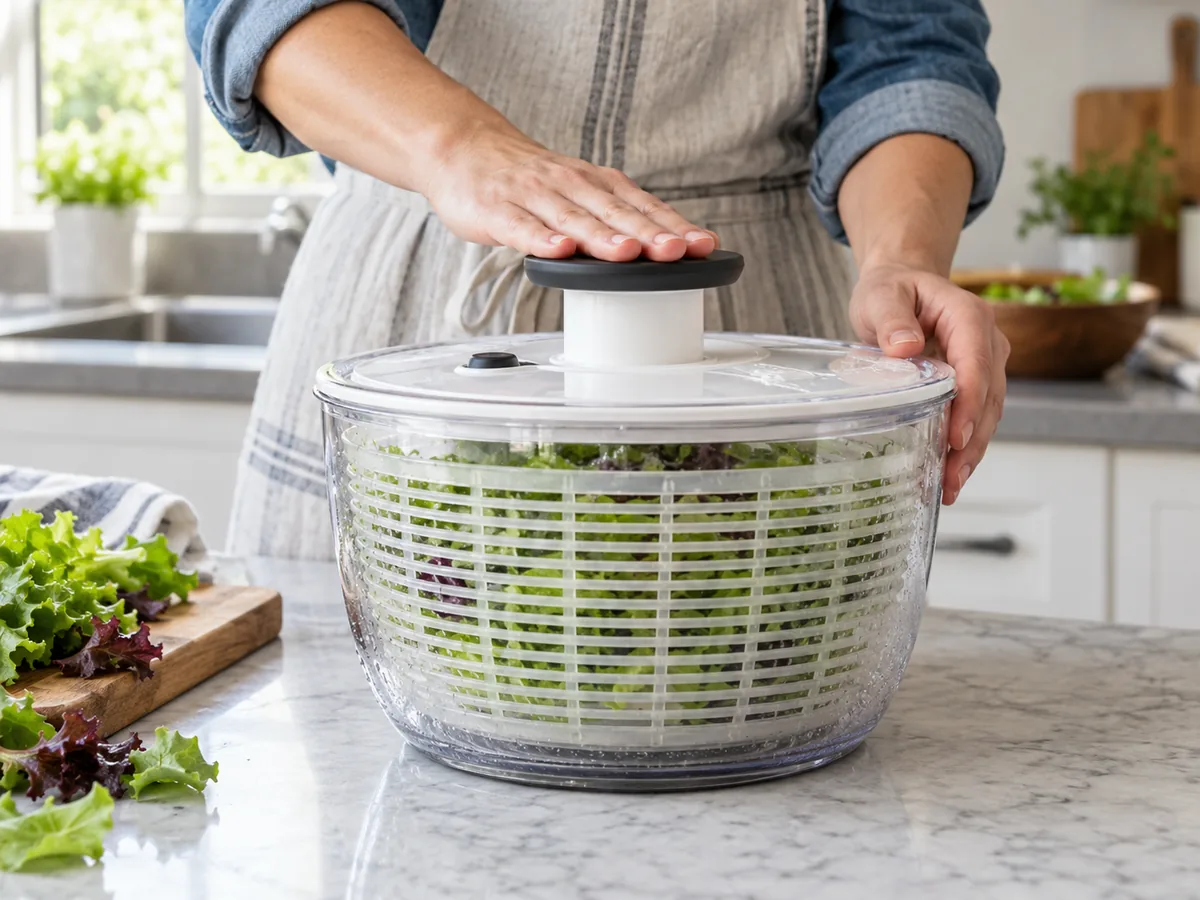
A spinner is useful when you wash greens regularly, prepare several servings, or want to remove water before dressing. The basket can also serve as a colander for rinsing, while the outer bowl catches water. Follow the product instructions, avoid overfilling, and spin in manageable batches. A spinner reduces surface water; it does not replace inspection and proper washing.
Tradeoffs to consider
- Drying speed: spinning is quicker for batches; towel drying gives you direct control over a small amount.
- Storage: a spinner is bulkier than a colander and towel.
- Cleanup: a spinner has multiple parts to wash and dry; a colander is simpler.
- Versatility: a colander and towels already serve other tasks; some spinner baskets can double as a colander.
- Best fit: buy a spinner if frequent wet greens are a real kitchen bottleneck, not just for an occasional salad.
Cleaning and storage
After use, separate the parts that are designed to come apart, wash them according to the manufacturer’s directions, and let them dry fully before storage. Keep the spinner where you can reach it easily; a bulky tool that is hard to access is less likely to become part of your routine.
Featured option
The OXO Good Grips Salad Spinner is one option if you want a dedicated tool for drying washed greens. Its basket can also be used for rinsing; check the current listing for exact size, components, and care guidance. Compare those details with your cabinet space and batch size.
Featured product: OXO Good Grips Salad Spinner
Consider it for frequent salad prep when a faster batch-drying routine is useful and you have room to store the parts.
Confirm the exact model and care details in the listing before ordering.Which one is right for you?
Stick with a colander and towel if you make small salads occasionally and want minimal storage. Consider a spinner if you regularly prepare greens for multiple meals or dislike waiting for leaves to drain. Either method works best when you dry the greens well before adding dressing.
Disclosure: Zoventaq may earn a commission from qualifying purchases made through affiliate links, at no extra cost to you.
Side-by-side comparison
| Feature | Salad spinner | Colander and towel |
|---|---|---|
| Dryness | Removes most surface water quickly | Drier results need patting and time |
| Storage | Bulky bowl and basket | Flexible, uses tools you already own |
| Cleaning | Several parts to wash | Easy, towel goes in the laundry |
| Best for | Frequent salads and greens | Occasional use, small kitchens |
How to dry greens well
- Wash greens in cold water and lift them out, so grit stays in the bowl.
- Spin in small batches. Overfilling the basket stops the water from flying off.
- Pat any damp spots with a clean towel.
- Store dry greens in a container lined with a paper towel.
Why dry greens matter
Extra water dilutes dressing and makes leaves limp, and wet greens spoil faster in the fridge. Dry leaves hold dressing better and last longer.
Which to choose
If you eat salads or wash lettuce often, a spinner saves time. If your cabinet space is tight, a colander and a clean towel will do the job with a little more effort. Check capacity, lid tightness and how easy the parts are to clean before you buy.
How to tell when greens are dry enough
Greens are ready when no water drips as you lift a handful and the leaves feel cool but not slick. Dry leaves hold dressing better and stay crisp longer. If you can see droplets collecting in the bowl when you shake them, give them another spin or pat. Delicate leaves such as baby spinach and arugula bruise easily, so use gentler, shorter spins or the towel method for those.
Washing and food-safety basics
- Wash your hands and the sink or bowl before handling produce.
- Rinse greens under cool running water; soap or produce washes are not necessary.
- If a package says the greens are pre-washed and ready to eat, follow the label instead of washing them again.
- Use clean tools, and wash the spinner basket and lid after each use so old moisture does not sit in the parts.
Storing washed greens
Line a container with a dry paper towel, add the dried leaves loosely, cover and refrigerate. Do not pack them tightly, because crushed leaves wilt faster. Replace the paper towel if it becomes damp. For best quality, plan to use washed greens within a few days.
Quick questions
Can I use a spinner for other foods?
Many people use one to dry herbs or washed berries, but follow the manufacturer’s instructions. Delicate berries can bruise in a fast spin, so a gentle approach may be better.
How do I stop the spinner from walking across the counter?
Put a damp towel or non-slip mat underneath and avoid overfilling the basket, which makes it off-balance.
Updated October 29, 2026. Zoventaq’s guides are desk research and are not based on hands-on testing.