Zoventaq is reader-supported. When you buy through links on this page, we may earn a commission at no extra cost to you. As an Amazon Associate, we earn from qualifying purchases.
If you want the best digital kitchen scale for baking and meal prep, start with what you will actually weigh: flour and sugar one day, chicken and rice the next. This guide looks at one popular pick, the Etekcity EK6015, and shows who it suits, where it falls short and what to check before any scale goes in your cart.
Quick pick
How we picked this scale
We did not lab-test this scale. This guide is built from the Amazon listing specs, the manufacturer’s published details and the themes that repeat in buyer reviews, both the praise and the complaints.
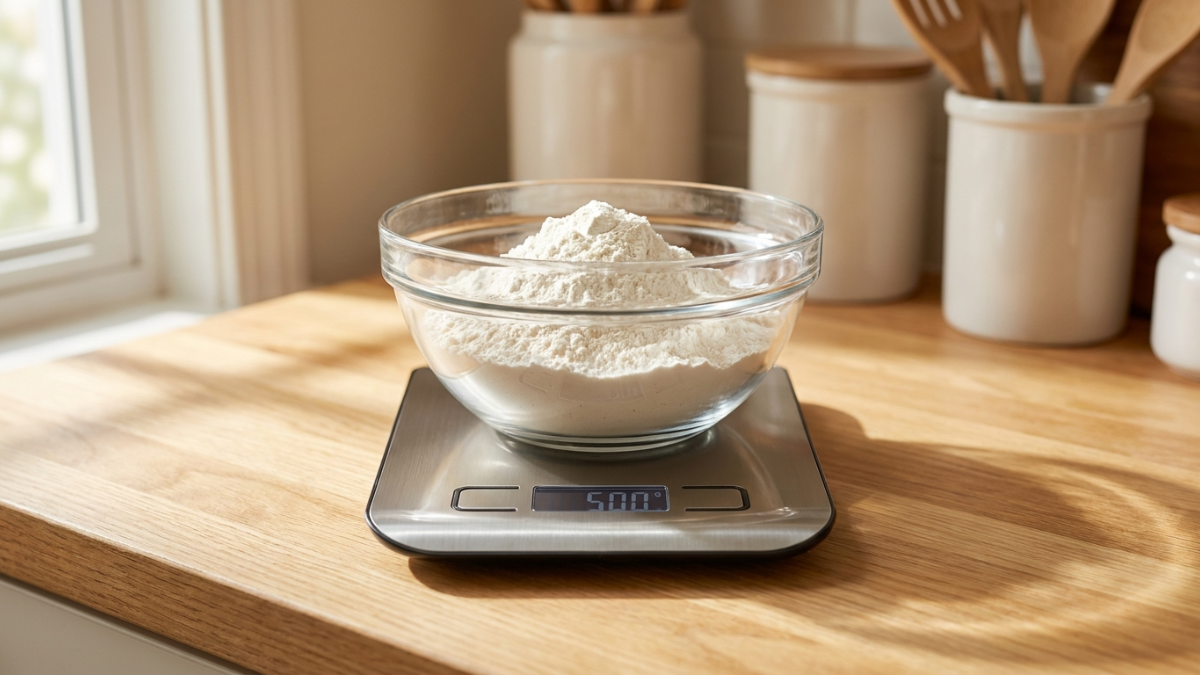
We judged it on five things that matter in a home kitchen: how finely it reads, how much it can hold, how easy it is to zero out a bowl, how it handles spills, and where it lives when you are not using it.
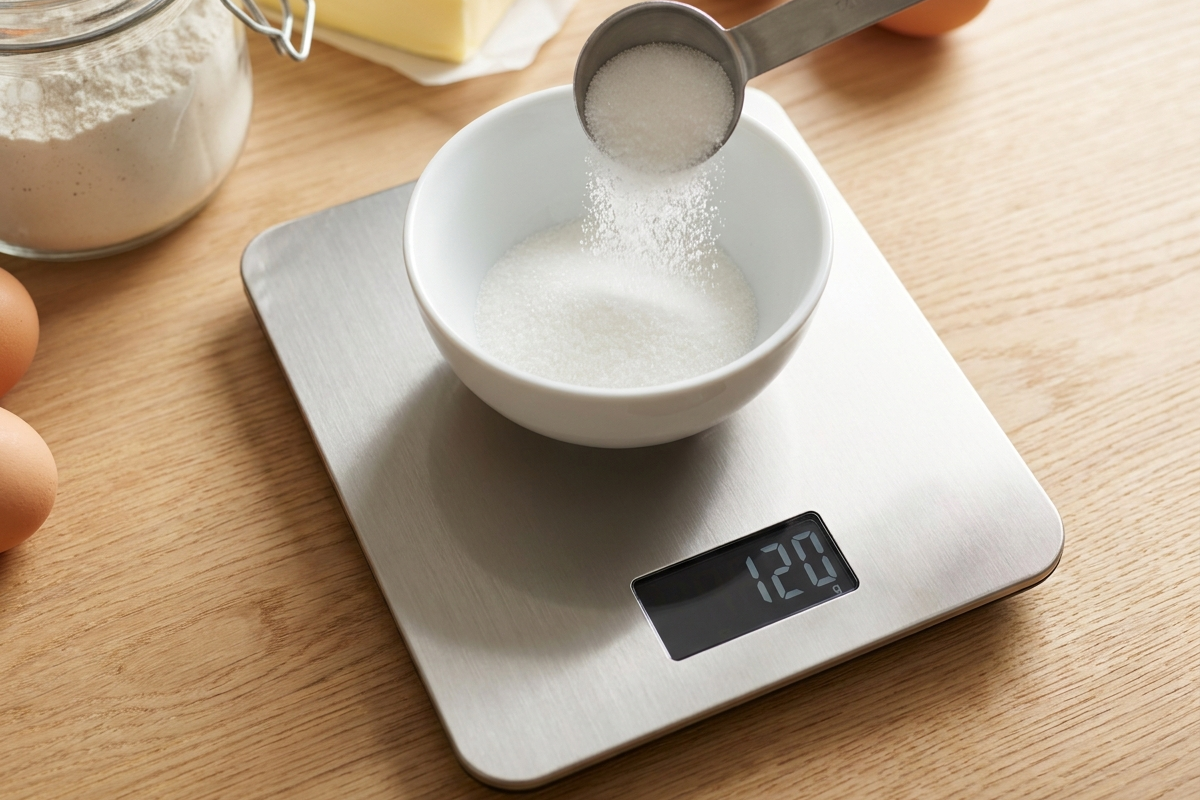 AI-generated illustration, not a product photo
Etekcity EK6015 Food Kitchen Scale
Best for: home bakers and meal preppers who want a simple, slim scale for everyday weights.
- 1 g increments
- 11 lb (5 kg) capacity
- Brushed 304 stainless platform
- 0.6 in thick
The EK6015 is a flat, rectangular scale with a stainless steel platform and a small display at the bottom. You can switch between grams, ounces, pounds with ounces, milliliters and fluid ounces, and a tare button zeros the display after you set a bowl on top.
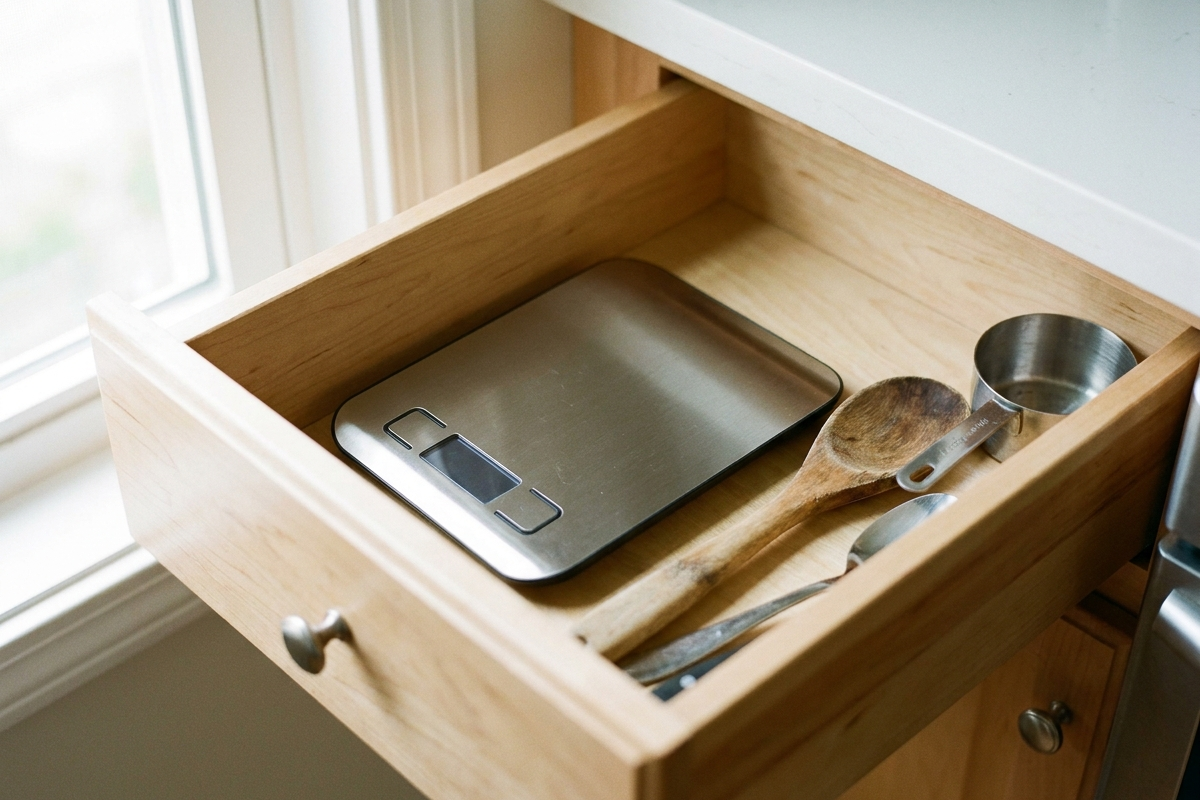
It runs on two AAA batteries, which the listing says are included. The smooth top wipes clean with a damp cloth, and the slim body fits in a utensil drawer.
- Slim enough to store flat in a drawer
- Tare function makes bowl-and-add recipes easy
- Five units cover US and metric recipes
- Smooth steel top is easy to wipe
- The minimum reading is 2 g, so tiny spice or coffee doses are out
- Some buyers report readings that drift after long use
- Some buyers mention battery problems
Skip it if: you regularly weigh amounts under a few grams, such as yeast, salt for bread dough or coffee, and need 0.1 g precision.
Check price on Amazon See current price, photos and reviews on AmazonWhich kind of kitchen scale fits you?
Most people choose between four styles. This table shows where the EK6015 style sits and when another type makes more sense.
| Scale type | Typical reading step | Best for | Watch out for |
|---|---|---|---|
| Flat 1 g scale (EK6015 style) | 1 g | Flour, sugar, batter, portioned meals | Not precise enough for very small doses |
| 0.1 g precision scale | 0.1 g | Yeast, spices, coffee, bread dough extras | Often a lower maximum weight |
| Scale with built-in bowl | 1 g | Dry ingredients and quick portions | Bulky to store, one fixed bowl size |
| Mechanical spring scale | Dial marks | Battery-free backup | Harder to read exactly, usually no tare |
What to check before you buy any kitchen scale
- Match the increment to your recipes. A 1 g scale is plenty for flour, rice and portion sizes. If your recipes call for 2 g of yeast, look at a 0.1 g model instead.
- Check the platform size. Your largest bowl should sit on the platform without covering the display. A flat top that is too small makes big mixing bowls tip.
- Look for a real tare button. Taring lets you add each ingredient to the same bowl and reset to zero in between.
- Think about batteries. A scale that eats batteries is annoying, so keep spares and take the batteries out if it sits unused for months.
- Plan where it will live. A scale you have to dig out never gets used. A thin one that lives in the drawer next to your measuring cups does.
If you measure with cups too, our comparison of angled and standard measuring cups shows where a cup is still faster than a scale.
How to use a scale for baking and meal prep
- Set the bowl on, then tare. Press the button so the display reads zero before you add anything.
- Add one ingredient at a time. Pour slowly and stop just under your target, since you cannot take flour back out.
- Tare again between ingredients. The display goes back to zero, so you can add the next ingredient to the same bowl.
- Weigh raw food for raw portions. For meal prep, decide whether your plan counts raw or cooked weight and stay consistent, because cooking changes the weight.
- Let the reading settle. Wait a moment before you write the number down, especially after pouring from a height.
Prepping meals for the week? Our guide to freezer trays versus freezer bags helps you store the portions once they are weighed.
A simple accuracy check you can do at home
A US nickel weighs 5 grams, so a stack of ten should read about 50 g. Set the stack on the scale after taring and see how close it lands.
Repeat the check every few months. If the number is off or keeps changing, replace the batteries first and then try again on a flat, hard surface.
Frequently asked questions
Is a kitchen scale better than measuring cups for baking?
For dry ingredients like flour, usually yes. A scooped cup of flour can weigh noticeably more than a spooned-and-leveled one, while a weight is the same every time.
What does 1 g increment mean?
The display moves in steps of one gram. That is fine for most baking and portioning, but it cannot show half-gram differences.
Why does my scale reading jump around?
Weak batteries, a soft or uneven surface and drafts are common causes. Put the scale on a flat counter, replace the batteries and let it settle.
Where should I keep a slim kitchen scale?
Store it flat in a drawer with nothing heavy on top. See our tips on drawer storage checks before you add an organizer.
The bottom line
For everyday baking and meal prep, a slim 1 g scale like the Etekcity EK6015 covers most jobs and tucks away easily. If your recipes use tiny amounts, choose a 0.1 g scale instead.
Check price on Amazon