
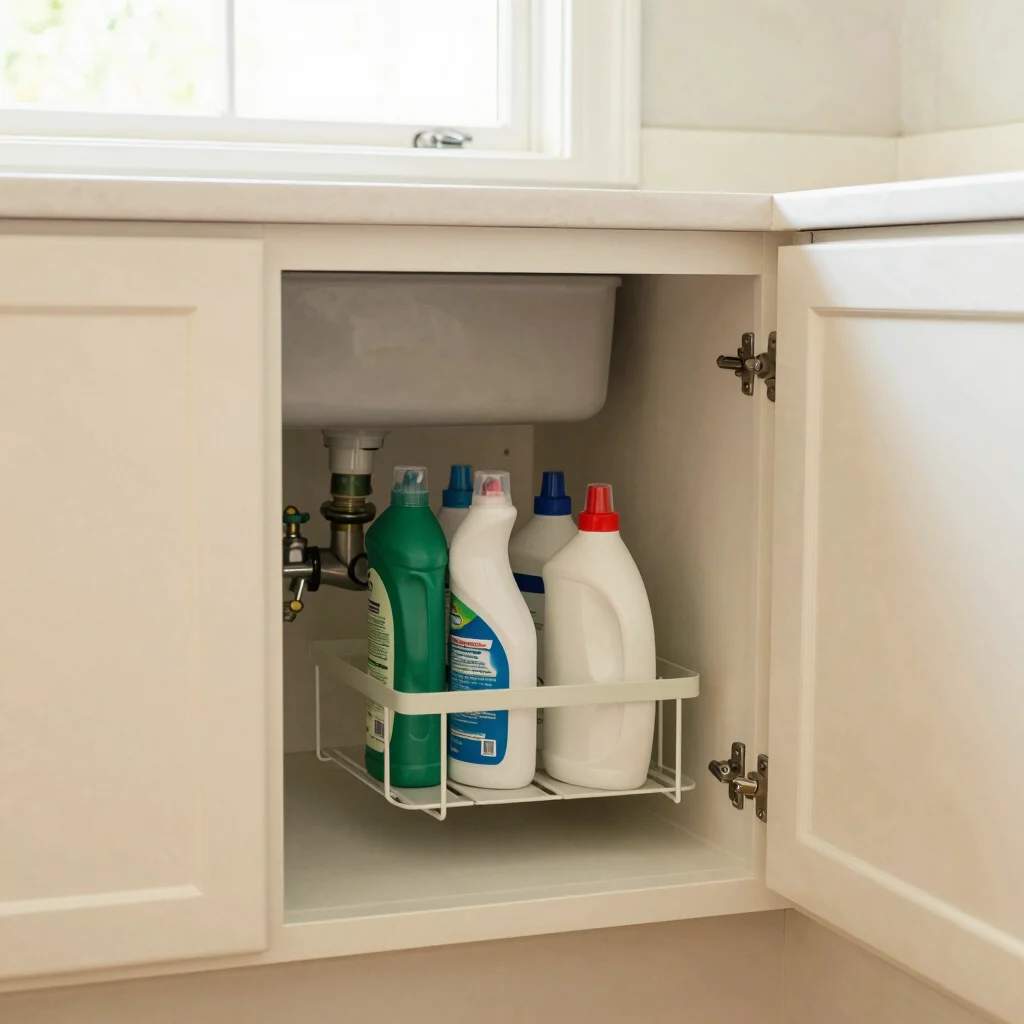
An under-sink organizer can look spacious in a product photo and still leave no room for a drainpipe, shutoff valve, or cabinet hinge. Empty the cabinet first and decide what belongs there: dish soap and sponges, spare supplies, or cleaning products. That inventory matters as much as the organizer’s advertised dimensions.
Measure around the plumbing
Measure the cabinet’s interior width, depth, and height, then note where pipes and valves sit. Check the door swing and hinges too, since a shelf that fits inside may still interfere with closing the door. Compare these measurements with the organizer’s full dimensions, not just the width of its base.
Match the shape to your supplies
A two-level design can separate small bottles from taller containers, while a single open shelf may be simpler when the plumbing takes up the center of the cabinet. Sliding sections can improve access, but they need enough clearance to move without catching on pipes or stored items. Think about what you lift out regularly, not only how much the organizer holds.
Leave room for upkeep
Keep access to shutoff valves clear, and avoid packing the cabinet so tightly that you cannot spot a drip or wipe up a spill. Product descriptions can provide measurements and materials, but they cannot confirm fit in your cabinet or answer every question about daily use. This is a research-based guide, not hands-on testing; affiliate links, when included, may earn Zoventaq a commission.
Use a fit worksheet, not a single width measurement
Record four separate spaces: the door opening, the cabinet floor, the area beside the drain, and the pull-out path. Measure each side of a center divider separately. Include the sink bowl, disposal unit, hoses, hinges, and valves in your sketch. A product that fits the floor may collide with the sink at the upper tier.
For a sliding unit, check both its closed depth and the clearance required when extended. Include the handle and the tallest bottle you plan to store. A paper footprint helps you visualize width and depth, but it does not test slide movement or top-tier clearance. Do not move plumbing or electrical connections to make an organizer fit.
Compare three practical layouts
One removable caddy: Simple to lift out for wiping or leak checks, but bottles can become crowded. Two-tier shelf: Makes use of height; unsuitable when the upper shelf intersects the sink or pipes. Pull-out drawer: Brings supplies forward; requires unobstructed travel and the mounting method specified by the maker. For an awkward cabinet, two small caddies beside the plumbing may be easier to use than one large fitted system.
Check installation and daily access
Read whether the organizer is freestanding, screw-mounted, or adhesive-mounted before ordering. Verify the cabinet material is suitable and, if renting, check permission before drilling. Use the stated load limits for the exact model and tier. Keep product labels visible and cleaning supplies in their original containers. Leave valves accessible and do not use storage to conceal an unresolved leak.
Pinterest product example: pull-out under-sink organizer
The Vtopmart 4-Pack Pull-Out Under-Sink Organizer (ASIN B0BZNPDHR9) is one specific option shown in our Pinterest guide. A pull-out layout may bring supplies forward, but the cabinet must have room for the unit and its full travel.
Measure the door opening, floor area, pipes, valves and extension path. Compare the current listing’s exact dimensions and installation requirements. Keep shutoffs visible and leave room to spot or clean a leak.
Frequently asked questions
How much clearance should I leave? There is no universal allowance. Use the manufacturer’s full dimensions and installation requirements, then allow the space your hands, bottles, and moving parts actually need.
Can I use a bathroom organizer under a kitchen sink? Only if its dimensions, load limits, material-care instructions, and intended use suit that location. The category name alone does not establish compatibility.
Should food go under the sink? Choose a separate suitable food-storage location; keep food away from cleaning chemicals and areas where plumbing can leak.
Compare storage options and product checks, or start with a no-purchase small-kitchen layout trial. As an Amazon Associate I earn from qualifying purchases.


Safety and moisture checks before you load the cabinet
- Look for leaks first. Run the water, then check supply lines, the trap and the cabinet floor for drips or swelling before adding an organizer on top of a problem.
- Keep chemicals upright and secured. If children or pets are in the home, store cleaning products out of reach or use a cabinet lock.
- Separate cleaners from food. Store food items in a different cabinet so spills do not mix.
- Leave the shut-off valves reachable. Do not block the supply valves so you can turn off water quickly in an emergency.
- Use a liner you can wipe or remove. A waterproof tray or mat under the organizer makes a slow leak easier to spot.
A five-minute fit test
Cut cardboard to the organizer’s listed footprint and set it in the cabinet. Open the door fully, slide the cardboard in and out, and check that it clears the pipe, the disposal and the hinges. Then stack a box to the listed height to confirm you can lift items out without hitting the sink above. If the cardboard does not fit, the real organizer will not either.
What to do if nothing fits
Some cabinets are simply too cramped for a pull-out unit. In that case, small stackable bins, a tension rod for spray bottles or an over-the-door rack can use space without needing a clear footprint. Measure again after decluttering, since removing unused items often solves the problem.
Updated October 29, 2026. Zoventaq’s guides are desk research and are not based on hands-on testing.