

If you make lunch at the counter, you may reach for a peeler, a small cutting board, and a storage clip in quick succession. Putting each item wherever it happens to fit can turn that routine into a search. Organize the drawer around a real prep task, then see whether the layout still works when everything is put away.
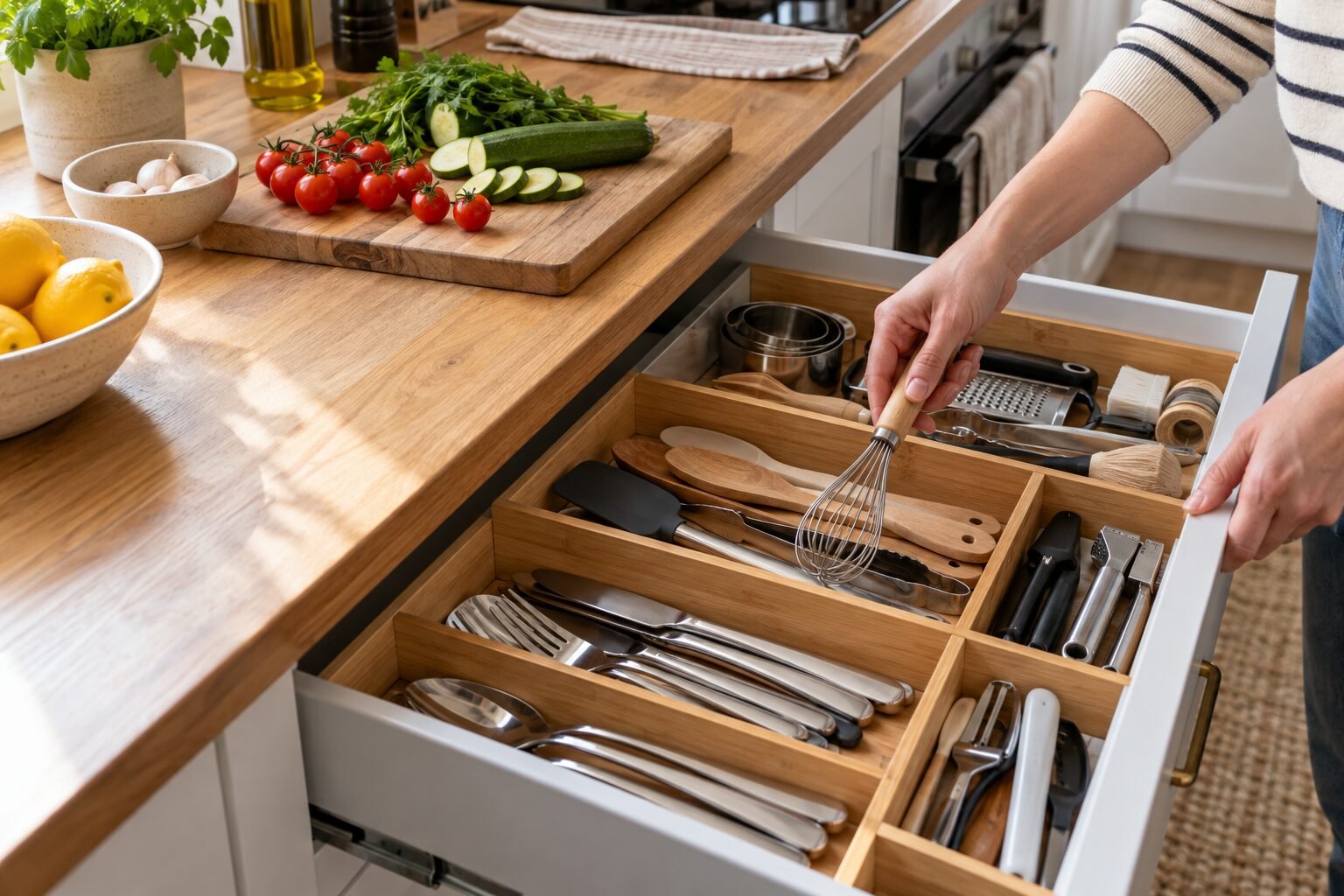
Sort by the task, not the label
Empty the drawer and group tools by how you use them, such as chopping, measuring, or opening packages. Set aside duplicates and items that belong closer to the stove or sink. Keep the tools you reach for most in the easiest-to-access part of the drawer, leaving occasional-use pieces farther back.
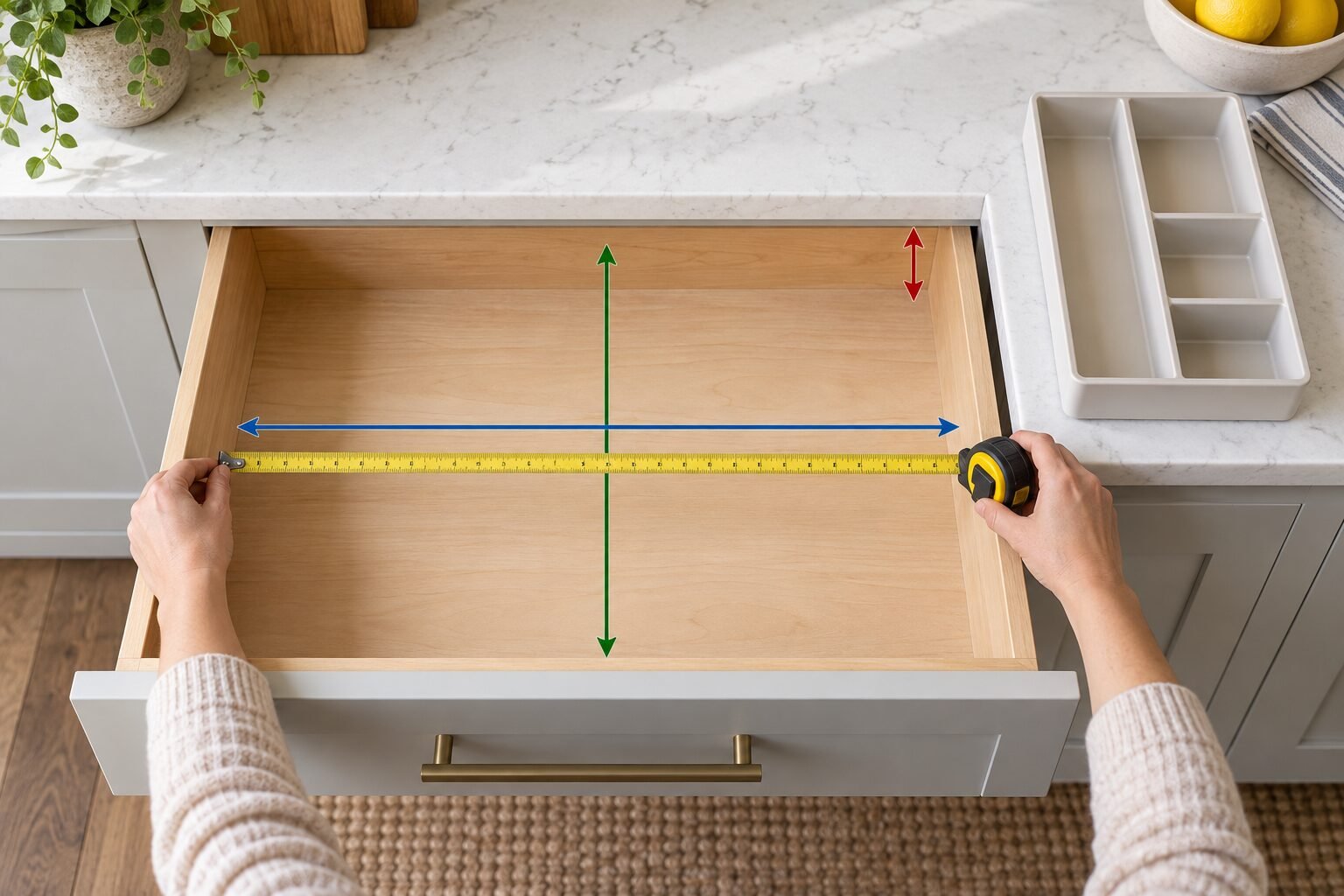
Fit dividers to the drawer
Measure the drawer’s interior width, length, and depth, accounting for the sides and any hardware that reduces usable space. Dividers can keep small tools from shifting, but fixed compartments may waste space if your tools vary in size. A simple open section can be more practical for a larger item such as a compact cutting board.
Choose helpers with clear jobs
When considering a food-prep tool, ask what step it makes easier, whether you have a place to store it, and how its care instructions fit your routine. Size, grip, material, and cleaning requirements are useful comparison points, but no guide can establish how an item will feel in your hand without hands-on use. Zoventaq’s guidance is research-based, not hands-on tested, and affiliate links may earn us a commission.
Build a drawer map before choosing dividers
Lay the clean, dry tools on a towel in the groups you use together. Separate daily tools from occasional baking or entertaining pieces. Measure your longest utensil and tallest handle, not just the drawer. The clearance above the drawer sides can be smaller than it looks when the drawer is open; test closing gently without forcing a tool against the frame.
Choose compartments around the contents
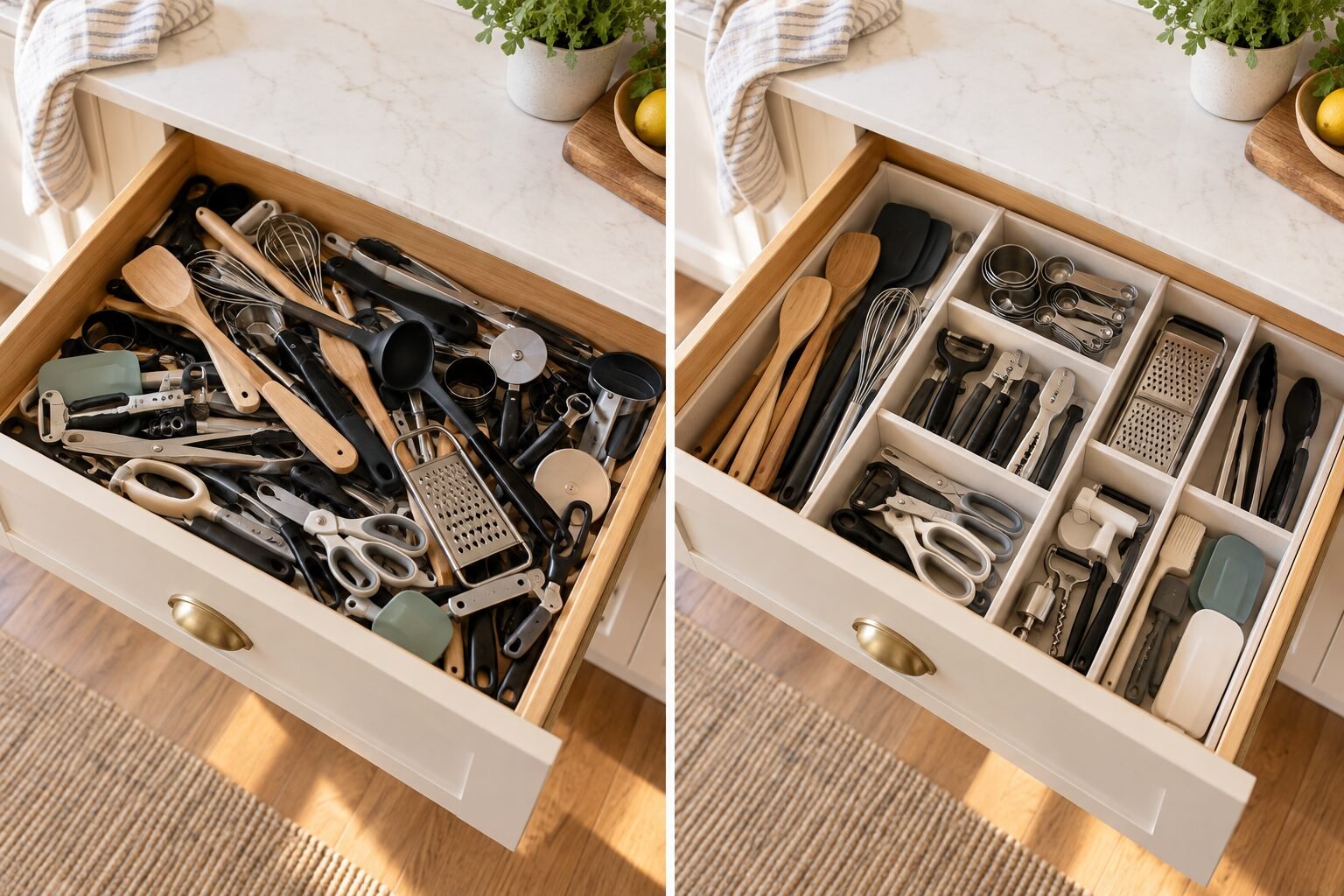
Fixed tray: Easy to lift out for cleaning, but preset slots may not fit wide handles. Adjustable dividers: Useful for mixed sizes, but check the extension range, contact points, and drawer-material compatibility. Separate small bins: Flexible when tools change, although gaps between bins can waste space. One open compartment: Useful for a large tool that otherwise occupies several small slots. Keep sharp blades protected using the maker’s recommended cover or a suitable dedicated holder.
Try one real meal and its cleanup
Use the temporary layout while preparing a meal you make regularly. Check whether the drawer opens when you stand at the cutting board, whether a helper can reach tools without crossing your work area, and whether putting clean tools away requires rearranging everything. Adjust the layout before purchasing a matching set of organizers. Store tools only after cleaning and drying them as directed.
When a new prep tool is worth considering
Write down the repeated task, what makes it difficult, and how the proposed tool would change it. A chopper can contain ingredients but also adds blades and parts to wash. A fine grater handles zest but cannot replace a slicer. A bench scraper moves chopped ingredients but does not replace a knife. Compare the full routine—setup, use, cleanup, and storage—rather than just the quickest step in a demonstration.
Keeping sharp tools safe in a drawer
Knives and peelers should not rattle loosely among spoons. Use a slotted block, sheaths or a dedicated blade tray so you do not reach into a blade. If children are in the home, think about a drawer with a safety latch.
A monthly reset
Once a month, take everything out, wipe the drawer and put back only what you actually used. Duplicates and tools you have not touched can move to a lower-use cabinet. This keeps the drawer from slowly refilling with clutter.
Choosing between fixed and adjustable dividers
Fixed trays are quick to install and good for stable collections, such as cutlery. Adjustable or expandable dividers suit drawers with mixed items, since you can reshape the compartments as your habits change. Whichever you choose, leave a little spare room so the drawer still closes freely.
Updated October 30, 2026. Zoventaq’s guides are desk research and are not based on hands-on testing.
Common questions
Should I buy the organizer first? Sort and measure first. Buying a tray before checking your tools can leave you organizing around compartments that do not suit your routine.
Do all tools need to fit in one drawer? No. Keep daily preparation tools accessible and place occasional-use items elsewhere when practical. Avoid overfilling a drawer so heavily that items jam or exceed its specified load.
What makes a divider easy to maintain? Look for accessible corners and a removal method that lets you clean underneath. Confirm cleaning instructions; material names alone do not establish dishwasher compatibility.
Explore kitchen helpers and their trade-offs, storage buying criteria, and the small-kitchen layout guide. As an Amazon Associate I earn from qualifying purchases.