
Zoventaq is reader-supported. When you buy through links on this page, we may earn a commission at no extra cost to you. As an Amazon Associate, we earn from qualifying purchases.
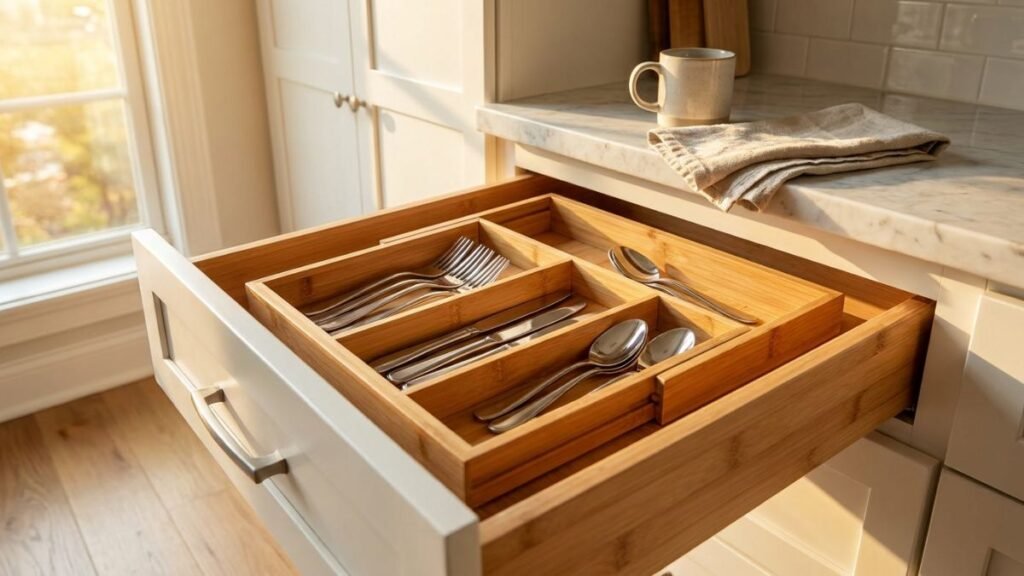
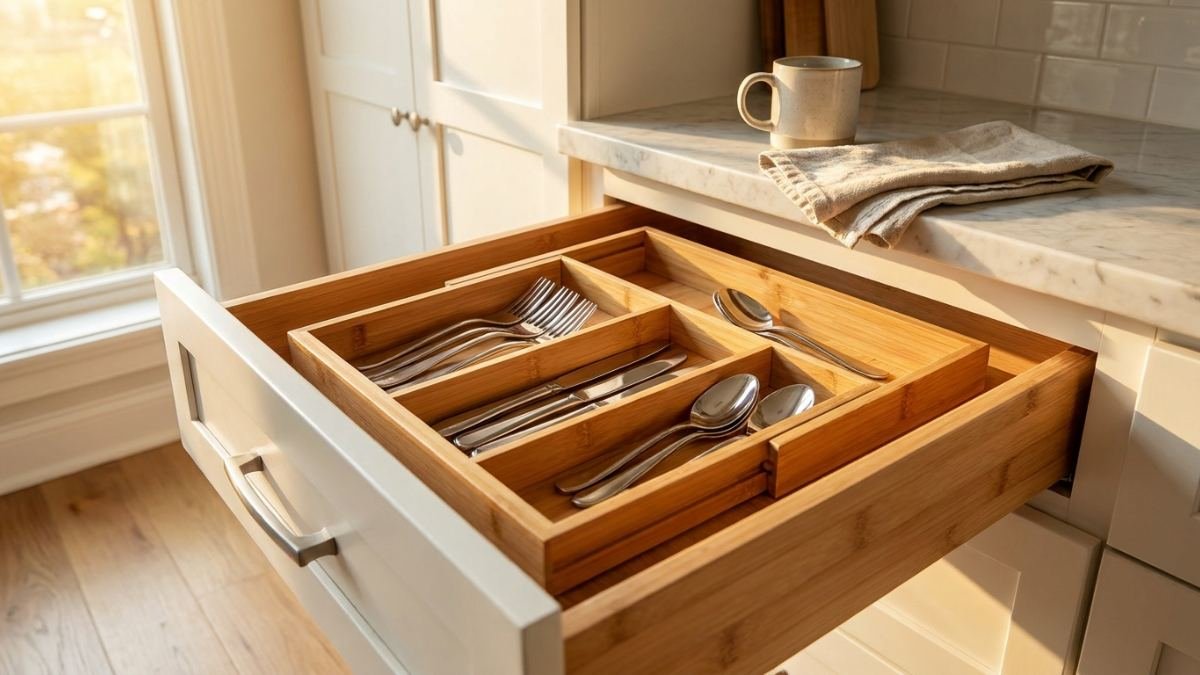
Looking for an expandable drawer organizer for silverware? The right tray makes a messy utensil drawer easy to use, but a tray that is too wide or too tall will not close. This guide covers the Pipishell expandable bamboo silverware organizer, what it does well, where it falls short, and how to measure your drawer before you order.
How we picked
We have not physically tested this product. This guide is based on the listing details and measurements on the Amazon page and a read through buyer feedback there. We looked at what size or space the product needs, how it is built, and the complaints buyers raise most often.
Pipishell expandable bamboo silverware organizer: what to know
Best for adjustable fit in a standard drawer
Pipishell Expandable Bamboo Silverware Organizer
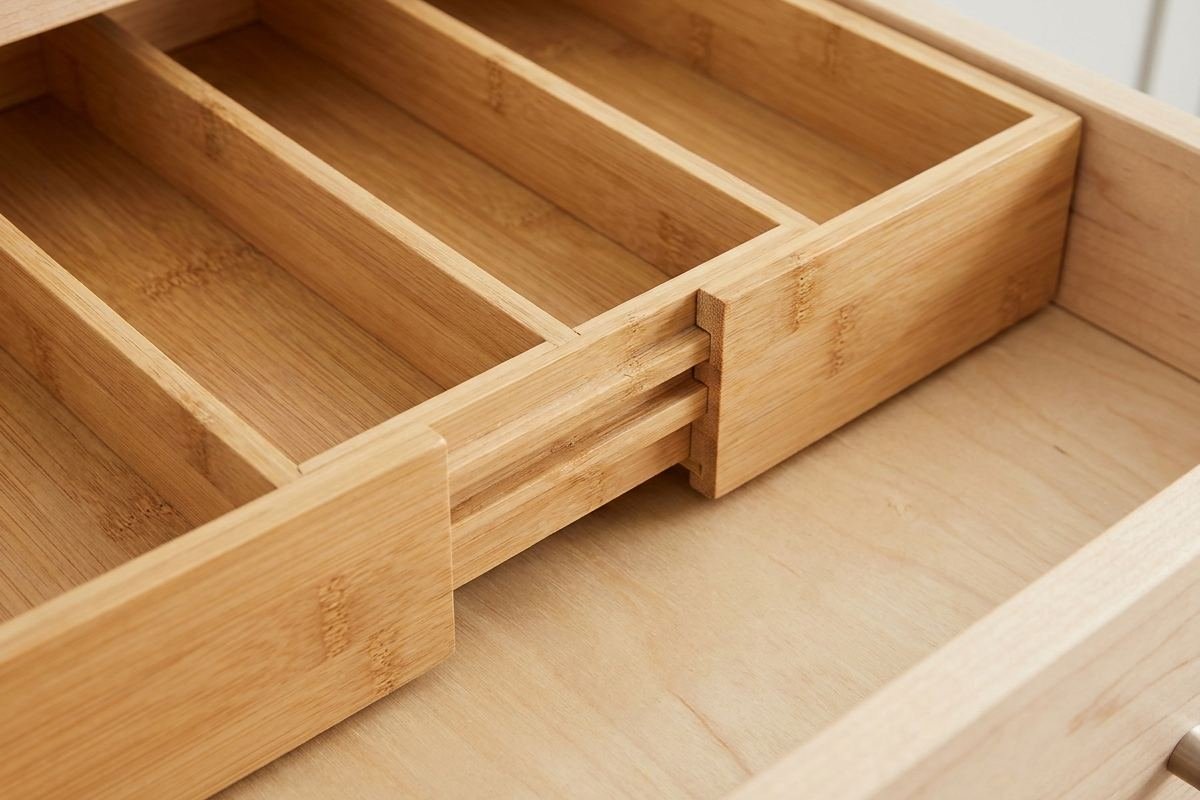
- Bamboo tray with a sliding section that expands from about 13 to 19.6 inches wide.
- The listing describes six to eight compartments, enough for flatware plus a few larger utensils.
- Wipe-clean bamboo, with a smooth-sliding expansion that lets you fit the tray to the drawer.
Keep in mind: The listing says to air the tray out for about 72 hours before first use, and bamboo should be wiped clean rather than soaked. Some buyers wish it were bigger. Skip it if your drawer is shallow or narrower than the tray’s smallest setting.
Measure your drawer first
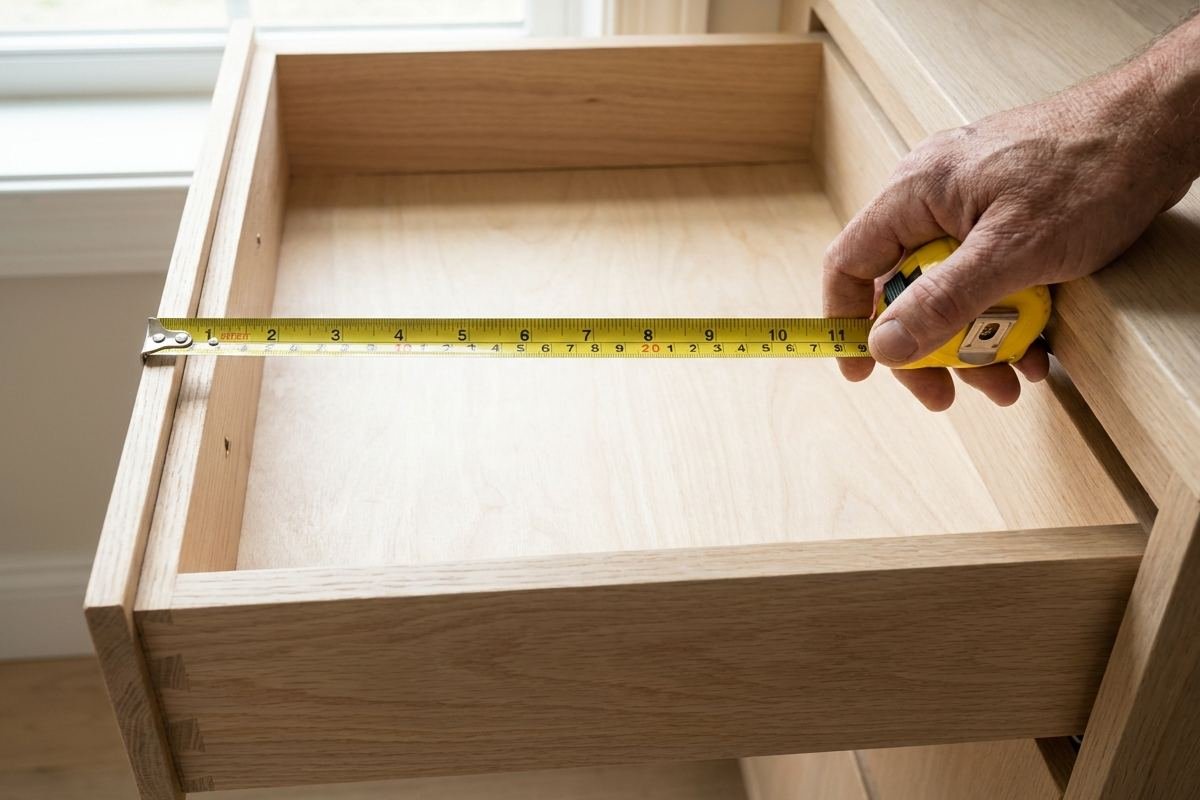
Most returns on drawer trays come from skipping the tape measure. Take these three measurements with the drawer empty:
- Width: measure the inside width from wall to wall, at the narrowest point. The tray should land between its smallest and largest setting, with a little room to slide.
- Depth: measure from the back of the drawer to the front panel. Compare it with the listed tray depth.
- Height: measure the inside height. A deeper tray needs clearance so the drawer closes fully.
Expandable tray vs. fixed tray
| Type | Best for | Watch out for |
|---|---|---|
| Expandable tray | Drawers that are not a standard size | Slider can shift if the tray is not seated |
| Fixed tray | Drawers that match the tray exactly | Gaps if the drawer is wider |
| Drawer dividers | Mixed items, not just flatware | Less rigid; items can slide |
Tips for getting a good fit
- Expand the tray until it presses lightly against both drawer walls, then check that the drawer opens and closes.
- Place heavier knives in the back compartments so the front stays easy to reach.
- Air the tray out as the listing advises and wipe it clean with a damp cloth.
- Keep a spare drawer liner or non-slip mat under the tray if your drawer is smooth.
For more storage ideas, see how to set up a drawer around the food prep you do, our guide to the best spice drawer organizer and how to make a small kitchen work before buying storage.
Who should buy this tray, and who should skip it
A good fit: households with a standard kitchen drawer that holds everyday flatware and a few cooking utensils, and who want a natural-wood look. The expanding section lets you tune the fit if your drawer width is not a standard size.
Not a good fit: people with very shallow drawers, very narrow drawers, or who want to put the tray through a dishwasher. Bamboo needs gentle care, and a plastic tray may suit a busy household better.
Common mistakes to avoid
- Measuring only the front. Drawer fronts can hide a narrower interior, so measure inside.
- Forgetting height. A deep tray with tall utensils may stop the drawer from closing.
- Soaking bamboo. Water can warp wood, so wipe clean and dry the tray.
- Overfilling compartments. Packed slots make utensils harder to pull out one at a time.
Setting up the compartments
Put forks, spoons and knives in their own lanes, then use the wider compartments for serving spoons, a peeler or a small whisk. Keep your most-used items in the front so you can grab them without moving the tray. If a section stays empty after a week, slide the divider to make the other lanes roomier.
FAQ
What size drawer does this tray fit?
The listing says it expands from about 13 to 19.6 inches wide. Measure your drawer’s inside width, depth and height before buying.
Do I need to air it out?
The listing recommends airing the tray for about 72 hours before first use.
Can I wash it in the dishwasher?
The listing describes wipe-clean care, so avoid soaking or dishwashers.
How many compartments does it have?
The listing describes six to eight compartments.
Measuring a drawer the right way
Measure the inside of the drawer, not the front panel. Take the width at the front and back, since many drawers are slightly wider at the rear, and note the depth up to the drawer stop. Also measure the clear height so tall utensils still allow the drawer to close. Round down to the nearest fraction of an inch, because an expandable tray needs a little room to open and close.
Caring for a bamboo organizer
- Wipe with a damp cloth and dry immediately; avoid soaking.
- Keep it out of the dishwasher unless the maker says it is safe.
- If it starts to feel rough, a light rub with food-safe mineral oil can help, according to common bamboo-care advice.
- Replace or line it if it ever develops a musty smell or visible mold.
Keeping the layout organized
Place everyday items such as forks and spoons in the compartments nearest the front, and rarely used serving tools in the back or a separate drawer. Adding a thin non-slip liner underneath stops the tray from shifting when the drawer opens quickly. Revisit the layout after a few weeks, since your actual habits will show what needs to move.
Updated October 30, 2026. Zoventaq’s guides are desk research and are not based on hands-on testing.
Bottom line
If your drawer is a standard width and deep enough, this tray is a flexible, good-looking way to organize flatware. Measure first, air it out, and keep it dry. See it on Amazon