
As an Amazon Associate I earn from qualifying purchases. A sink caddy can keep a brush and soap close to the sink, but the ledge, faucet and water path determine whether it will be convenient. Use these checks before choosing a spot.
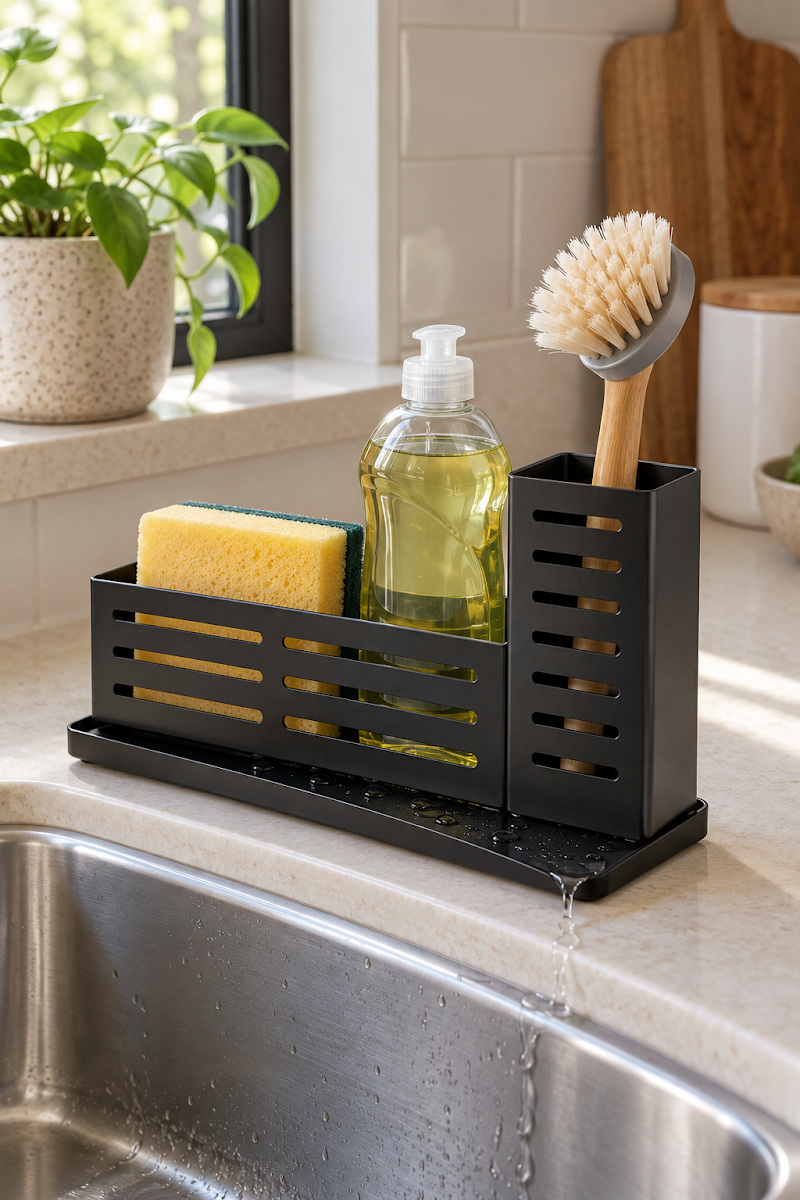
Measure the usable ledge
Measure the flat surface where the caddy would rest. Include the faucet base, backsplash, sink rim and any raised lip that limits its footprint. Check that the caddy will not wobble or overhang into a walkway. If the sink has a narrow rim, compare a suction or over-sink option instead of assuming a countertop caddy will fit.
Plan water, drainage and cleaning
Keep the caddy where splashes can drain back into the sink rather than pool against the counter. Leave the faucet handle, soap dispenser, drain and sink strainer usable. Choose a spot you can wipe behind, and follow the product directions for cleaning and drying. If standing water collects, empty and clean the caddy more often or choose a style with drainage suited to your sink.
Consider the featured caddy
The example in this guide is the Cisily Black Sink Caddy with Brush Holder, 9.25 inch (ASIN B0C3QZ7SNF). Compare the listed outside dimensions with your usable ledge and confirm the current materials and care instructions. A caddy may group sink tools, but it does not create more counter space if it crowds the faucet or work surface.
Quick checklist
- Measure the flat ledge and any counter lip
- Keep faucet, drain and soap access open
- Plan for drainage and wiping underneath
- Verify the listing’s current dimensions and care guidance
Sink layouts vary. Use the product listing for current details and move the caddy if it interferes with cleaning or daily sink use.
Related guides
Measure an under-sink organizer · Choose a tool for tight cleaning spaces
How to measure the sink ledge
- Measure the flat depth of the ledge from the back wall of the sink to the edge of the basin. Many caddies need at least 3 to 4 inches of flat space.
- Measure the length of the usable ledge, leaving a gap on each side of the faucet.
- Check for a slope. A tilted ledge makes a caddy slide, and water pools on the wrong side.
- Note the faucet swing. Turn the faucet fully both ways and make sure the caddy will not block it.
Placement rules that keep the sink usable
Keep the caddy to one side of the faucet so you can still reach the tap handle. Put the sponge where it can drain into the basin, not onto the counter. Keep taller items such as brushes at the back, and leave room in front for a dish to rest while you wash it. A caddy should make the sink easier to use, so if it gets in the way of a large pot, move it.
Suction, adhesive or freestanding?
Suction caddies need a smooth, flat, clean surface and can lose grip on textured stone or old porcelain. Adhesive ones hold well but can leave residue and are hard to move. Freestanding trays sit on the counter and are the easiest to reposition, though they take up counter space. Pick the type that matches your sink surface.
Keeping it clean
Wet sponges and brushes grow germs when they stay damp. Choose a caddy with drainage holes or a slotted base, empty standing water every day, and wash the caddy itself with warm soapy water every week. Replace sponges every couple of weeks, or sooner if they smell.
Quick checklist before you buy
- Ledge depth and length measured
- Faucet swing and handle clearance checked
- Mounting type matches your sink material
- Drainage built into the design
Troubleshooting a sink caddy that stays wet
A wet caddy is the most common complaint with sink-side organizers. Standing water usually means the base has no drainage, the caddy sits level instead of tilting slightly toward the sink, or the sponge is dripping onto the tray. Try angling it so water runs back to the basin, lift the sponge onto an open rack, and empty the tray at the end of each day. If a caddy has no drain holes, wipe it dry after use instead of letting water sit.
A simple cleaning routine
- Daily: squeeze out the sponge, shake the brush and empty any standing water.
- Weekly: wash the caddy and brush holder with warm soapy water, rinse and let them dry upside down.
- Monthly: move the caddy and wipe the counter and sink rim underneath, where residue and mildew tend to start.
- Every couple of weeks: replace the sponge, or sooner if it smells or breaks down.
Which mounting type suits which sink
Stainless and porcelain sinks are usually smooth enough for suction-style holders, while textured or stone surfaces can break the seal. If you rent, a freestanding tray avoids adhesive residue. Whatever you choose, check the manufacturer’s stated surface compatibility, and test the hold before loading it with a heavy bottle of soap.
Quick questions
Can I put a caddy next to a stove-side sink?
Keep sponges and plastic away from burners and hot pans, and follow the product’s heat guidance.
What if my faucet is a pull-down model?
Check the hose swing before placing anything within reach, since a caddy can catch the hose or limit how far it extends.
Updated October 29, 2026. Zoventaq’s guides are desk research and are not based on hands-on testing.